
 Chinese
- HOME >> NEWS >> Industry news
NEWS
Latest Product
Contact Us
What Are the Differences in Applicable Scenarios Between Small Excavators and Large Excavators?
2025-12-25The differences in applicable scenarios between small excavators (usually referring to models under 6 tons) and large excavators (usually referring to models over 20 tons) stem primarily from variations in machine size, operating efficiency, ground contact pressure, and equipment mobility. The specific distinctions are as follows:
Differences in Operating Space and Site Restrictions
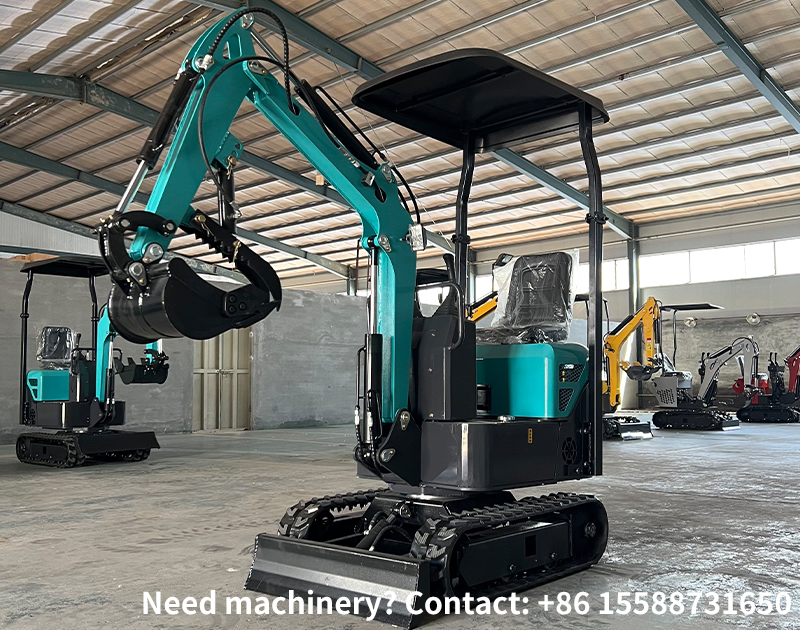
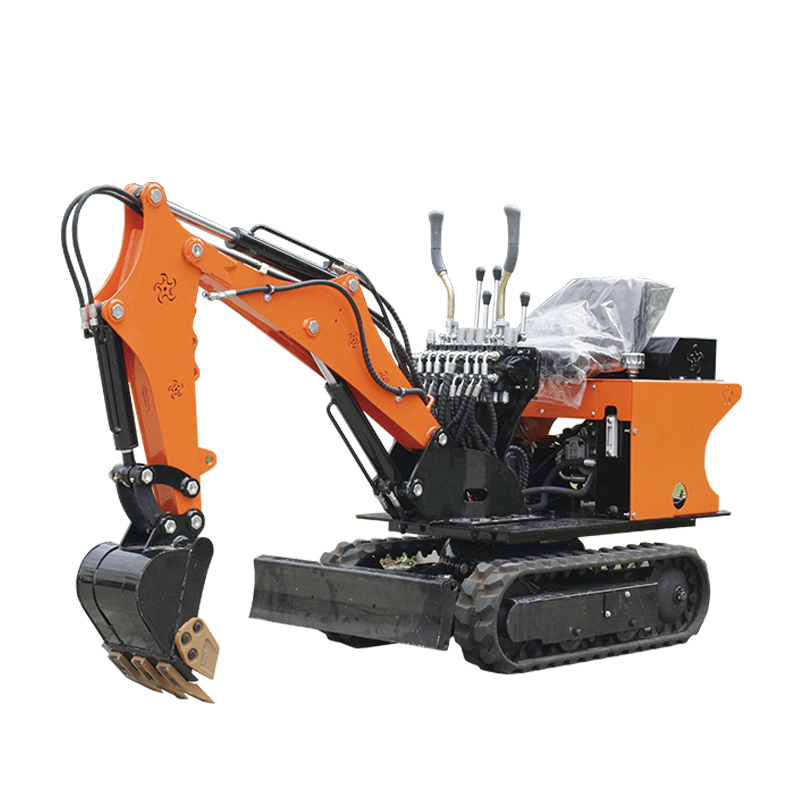
Small Excavators: Characterized by a compact body and a small slewing radius (some models can achieve zero-radius slewing), they can operate flexibly in narrow spaces. They are suitable for scenarios such as urban indoor demolition and renovation (e.g., structural demolition inside shopping malls and office buildings), courtyard/villa construction (garden arrangement, small swimming pool excavation), municipal pipe network maintenance (sidewalk sewer pipe laying, cable trench digging), and greenhouse/orchard operations (site leveling, fertilization trench digging). In addition, small excavators cause minimal ground damage, making them ideal for working on hardened roads or established landscape areas.
Large Excavators: With a bulky body and a large slewing radius, they demand ample operating space and are better suited for open sites. Typical applications include mining (rock stripping, ore loading), large-scale earthmoving projects (expressway subgrade excavation, reservoir dam construction), high-rise building foundation works (deep foundation pit excavation), and port/wharf loading and unloading (bulk cargo grabbing and transfer). They cannot access narrow or low-clearance work areas.
Differences in Operating Load and Efficiency Requirements
Small Excavators: Equipped with a small bucket capacity (generally 0.1–0.3 cubic meters) and limited digging force, they are light-load operation equipment. They are mainly used for tasks such as small-volume earthmoving, shallow excavation, and light breaking work (e.g., local repair of concrete pavements). Their operating efficiency caters to small-scale project needs, with advantages lying in flexibility and precision rather than high-efficiency mass production.
Large Excavators: Featuring a large bucket capacity (up to 1–5 cubic meters or even larger) and strong digging force, they are heavy-load operation equipment. They can efficiently complete tasks such as large-volume earth excavation, hard rock breaking, and heavy lifting (e.g., hoisting steel reinforcement cages and large pipes with grab buckets). They are suitable for large-scale construction projects with tight schedules and heavy workloads, with core advantages of high productivity and efficiency.
Differences in Transit Transportation and Site Adaptability
Small Excavators: Light in self-weight, they can be directly transported by light-duty trailers without the need to handle special over-limit transportation procedures, enabling convenient transit. They are ideal for mobile operations across multiple small-scale sites, such as scattered maintenance tasks in different urban blocks by municipal maintenance teams. Meanwhile, small excavators have low ground contact pressure, so they are less prone to sinking when working on soft farmland or wetlands, and can also be used for agricultural land consolidation.
Large Excavators: Extremely heavy in self-weight, they require specialized heavy-duty flatbed trailers for transportation. Most of them are classified as over-limit equipment, so transit requires prior approval procedures, resulting in high transportation costs and poor mobility. They are suitable for long-term operations at fixed sites. With relatively high ground contact pressure, they tend to sink on soft ground. Before operation, steel plates or gravel must be laid to reinforce the ground surface, making them more adaptable to hardened or treated work surfaces such as mines and construction sites.
Differences in Supporting Attachments and Operating Functions
Small Excavators: Their compatible attachments are more oriented toward precision operations, such as small hydraulic breakers, rippers, trenching buckets, and log grapples. These attachments can be used in specialized scenarios including landscaping trimming, small tree transplanting, and agricultural trench digging and fertilizing. They can even be fitted with hydraulic shears for small-scale steel structure demolition.
Large Excavators: Their supporting attachments focus on heavy-duty and high-efficiency operations, such as heavy hydraulic breakers, rock buckets, screening buckets, and large grab buckets. These are applicable for high-intensity tasks like mine rock breaking, construction waste sorting, and large-scale stone loading. Some large excavators can also be modified into pile drivers or drilling rigs to carry out foundation pile construction.