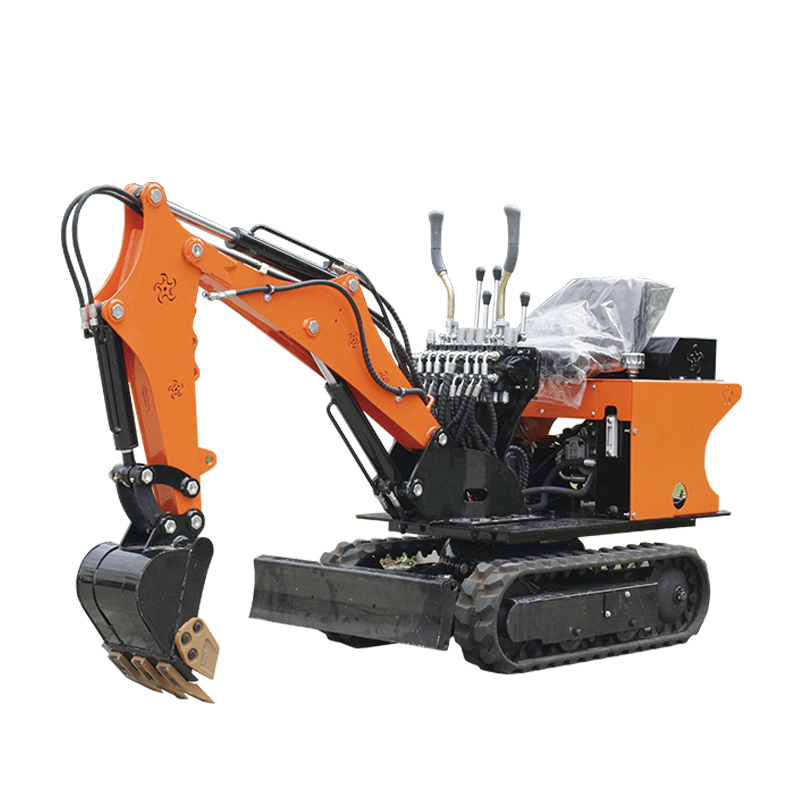
When an excavator excavates different types of soil, it is necessary to adjust the operation method according to the core characteristics of the soil, such as hardness, viscosity, and looseness. The core goals are to "protect the equipment, improve efficiency, and avoid jamming/overloading". The following classifies the common soil types and details the specific operation adjustment methods and precautions:
Soil Characteristics: Loose structure, no viscosity, easy to collapse and flow. Soil is prone to "running off" during excavation, but the resistance is small, so no large excavation force is required.
Core Operation Principle: "Shallow excavation and fast rotation, prevent collapse, control loss"
Avoid Deep Excavation: Control the single excavation depth within 1/2 to 2/3 of the bucket capacity. If deep excavation is needed (e.g., more than 1.5 meters), excavate in layers (0.8 to 1 meter per layer) to prevent the soil under the bucket from collapsing, which may cause the equipment to get stuck or the bucket to be buried.
Bucket Angle: Keep the bucket "slightly open" when lowering it (the angle between the bucket teeth and the ground is 30° to 45°), and avoid placing the bucket mouth completely flat. Loose soil is easy to leak from the gaps of the bucket mouth, and a slightly open angle can use the bucket wall to block the soil. Close the bucket quickly when retracting it to reduce soil loss.
Slow Down Boom and Arm Movements: When lifting the boom or retracting the arm, avoid stepping on the accelerator hard or operating the control lever quickly to prevent soil from "being thrown off" the bucket due to inertia. Control the rotation speed of the platform at medium to low speed (about 10 to 15 r/min) to reduce soil loss caused by centrifugal force.
No Full Load Required: Loose soil has small resistance, so there is no need to run the engine at full speed (maintaining medium speed, about 1500 to 1800 r/min is sufficient). This avoids no-load energy consumption of the hydraulic system and prevents the bucket from "over-excavation" (digging into unknown hard objects underground).
Prevent Getting Stuck: Check the ground bearing capacity before operation. If the soil is extremely loose (e.g., sandy soil after rain), lay steel plates or gravel to prevent the tracks/wheels from getting stuck. If the equipment is already stuck, do not rev the engine hard to get out of trouble. Instead, first insert the bucket into the soil ahead and slowly lift the boom to drive the machine out of the trap.
Slope Protection: When excavating slopes (e.g., foundation pits), the slope gradient should be gentle (1:1.5 to 1:2 is recommended), and the slope should be trimmed in time after each layer of excavation to prevent collapse.
Soil Characteristics: High viscosity, easy to agglomerate. It is prone to adhering to the inner wall of the bucket during excavation, resulting in "reduced effective bucket capacity". Its hardness increases when dry and it is easy to slip when wet, with moderate excavation resistance.
Core Operation Principle: "Prevent bucket adhesion, control humidity, stabilize force application"
Bucket Pretreatment: Before operation, apply waste engine oil or special anti-adhesive agent to the inner wall of the bucket to reduce clay adhesion. If there is no anti-adhesive agent on site, first dig a small amount of dry soil to "wipe" the inner wall of the bucket. The dry soil can absorb excess moisture and reduce viscosity.
Shovel Angle: When shoveling wet clay, insert the bucket teeth vertically into the soil (90° angle) and use the bucket teeth to "cut" the soil agglomerates to avoid soil accumulation caused by pushing soil with the side of the bucket. For dry and hard clay, first tilt the bucket teeth at 45° to 60°, use the tips of the bucket teeth to "break" the hard surface layer, and then insert vertically.
"Forceful" Bucket Retraction: When retracting the arm, slowly increase the hydraulic pressure (keep the engine speed at medium to high speed, about 2000 to 2200 r/min) to ensure the bucket can "bite off" the bonded soil. After retracting the bucket, slightly shake it (swing the control lever back and forth slightly) to shake off the soil adhering to the inner wall by vibration.
Avoid "Bucket Blockage": If the clay has too high water content (e.g., mucky soil), the soil is easy to block the bucket mouth if the bucket is completely closed during excavation, making it impossible to unload. Keep the bucket slightly open (leave a 10 to 15 cm gap), open the bucket mouth quickly when unloading, and slightly lift the boom at the same time to assist unloading with gravity.
Cleaning Cycle: After every 3 to 5 buckets of excavation, stop the machine to clean the soil adhering to the inner wall of the bucket (scrape it off with bucket teeth or rinse with a high-pressure water gun; if there is no water source on site, use the bucket to roll over the bonded soil lumps). Avoid increasing the bucket weight due to excessive adhesion, which will increase the load on the hydraulic system.
Anti-slip: The road surface with wet clay is easy to slip. Slow down the speed when rotating the platform or moving, and avoid sudden steering. If it is necessary to work on a clay slope, compact the bottom of the slope in advance to prevent the machine from sliding sideways.
Soil Characteristics: Dense structure, high hardness, large excavation resistance, requiring large excavation force. It is easy to cause wear of bucket teeth or overload of the hydraulic system, and even "the bucket cannot cut in".
Core Operation Principle: "Break first, full load, protect bucket teeth"
Small-scale Hard Soil (e.g., Compacted Subgrade): If the hardness does not reach the rock level, first insert the bucket teeth vertically into the surface layer of the soil (depth 5 to 10 cm), then slowly retract the arm and press down the boom at the same time. Use the combined action of "arm + boom" to "prize" the hard soil, break it, and then excavate.
Hard Soil Close to Rock (e.g., Weathered Rock): If the bucket cannot cut in alone, use a breaker (hydraulic crusher) for pretreatment. Use the breaker to break the hard soil into small pieces (the block diameter does not exceed 1/3 of the bucket width), then excavate with the bucket. Avoid forced excavation, which may cause the bucket teeth to bend or the hydraulic pump to overload.
Bucket Angle: When lowering the bucket, point the tips of the bucket teeth downward (the angle between the bucket teeth and the ground is 60° to 75°). Use the "tip pressure" of the bucket teeth (Pascal's principle: the smaller the area, the greater the pressure) to cut into the hard soil. Avoid "pushing soil" with the side of the bucket (which may cause uneven force on the bucket teeth and breakage).
Full Power Load: Run the engine at high speed (about 2200 to 2500 r/min, adjusted according to the model) to ensure the hydraulic pump outputs sufficient pressure (usually 80% to 90% of the system's rated pressure). Keep the movements "slow and steady" during excavation, and avoid pulling the control lever hard. Hard soil has large resistance, and fast movements are easy to cause hydraulic impact and damage the multi-way valve or oil cylinder.
Bucket Tooth Protection: Check the wear of bucket teeth before operation. If the tips of the bucket teeth are worn flat, replace them in time (worn bucket teeth have reduced cutting force, which will increase the load on the hydraulic system). Avoid direct impact of the bucket on underground hard objects (e.g., stones, steel bars) during excavation. If unknown obstacles are encountered, stop excavation and check before continuing.
Equipment Overload Protection: If the engine is found to be "stalled" (sudden drop in speed) or the hydraulic system makes abnormal noises during excavation, stop the movement immediately, move the equipment back, and adjust the excavation position. Do not force "hard biting". Long-term overload will cause overheating of hydraulic oil and damage to seals, shortening the service life of the equipment.
Soil Characteristics: Complex composition (e.g., loose soil on the surface + hard soil below, miscellaneous fill with gravel/bricks). The excavation resistance fluctuates greatly, and "bucket jamming" (gravel stuck between the bucket and the arm) or "bucket tooth jamming" is easy to occur.
Core Operation Principle: "Detect first, divide into areas, prevent jamming"
First "Test Excavation": Before operation, lightly dig 1 to 2 buckets at different positions to judge the soil layering (e.g., 0.5 meters of loose soil on the surface, hard soil below). Then excavate in zones in the order of "soft first, then hard" to avoid digging soil with large differences in hardness and softness in the same bucket (which may cause uneven force on the bucket).
Debris Cleaning: If the soil contains a large amount of gravel and bricks, control the bucket capacity during excavation (no more than 1/2). After retracting the bucket, check if there are sharp debris (e.g., steel bars, iron sheets) in the bucket. If there are, clean them first to avoid scratching the bucket wall or jamming the bucket mouth during unloading.
When Encountering Hard Spots: If local hard soil or gravel is suddenly encountered during excavation, do not continue to apply pressure. Instead, slightly adjust the bucket angle (rotate 10° to 15° left and right), cut into the hard spot from the side with the bucket teeth, separate it from the surrounding soil, and then excavate it separately.
Prevent Bucket Jamming: If gravel is stuck between the bucket teeth, first lower the bucket to the ground, slightly open the bucket mouth, then slowly push the bucket with the arm, and use the ground friction to squeeze out the gravel. Do not forcefully open or close the bucket mouth (which may cause damage to the bucket tooth oil cylinder).
| Soil Type | Core Adjustment Direction | Key Action Points | Equipment Protection Focus |
|---|
| Loose Soil | Prevent loss, prevent collapse | Shallow and layered excavation, slightly open bucket, slow rotation and lifting | Avoid getting stuck, do not rev the engine hard |
| Cohesive Soil | Prevent bucket adhesion, easy unloading | Oil coating inside the bucket, vibration to shake off soil, slightly open for unloading | Regular bucket cleaning, anti-slip |
| Hard Soil | Strong cutting, prevent overload | Break first, full-load power, vertical shovel with bucket teeth | Replace worn bucket teeth, avoid engine stalling |
| Mixed Soil | Zoning, prevent jamming | Test excavation first, clean debris, cut hard spots from the side | Prevent gravel from jamming bucket teeth, no forced movements |
Through the above targeted adjustments, the excavation efficiency can be maximized, and equipment wear can be reduced to extend the service life of the excavator. In actual operation, it is also necessary to flexibly optimize according to the actual on-site soil conditions (e.g., water content, impurity content) and not completely copy the theory.
Would you like me to organize an English operation checklist for excavators in different soil conditions based on this translation, so you can quickly check the key points before and during operation?


 Chinese