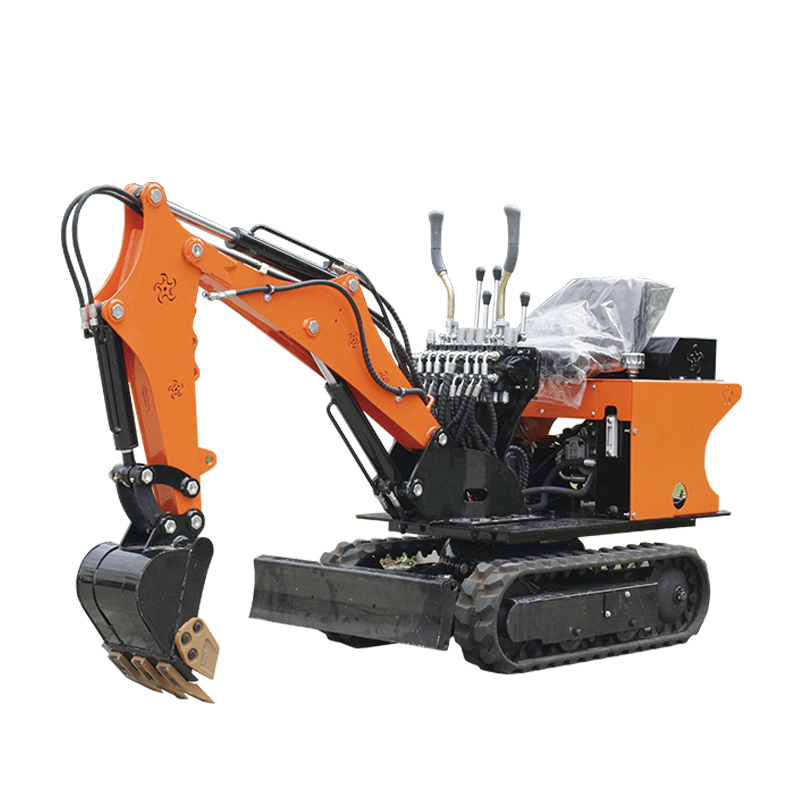
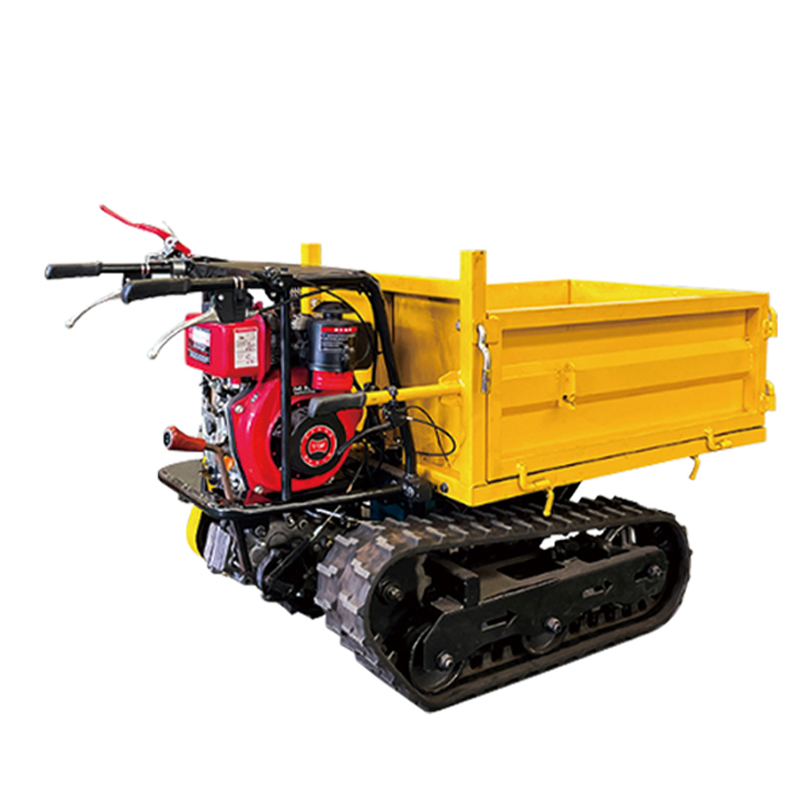
The maneuverability of tracked transport vehicles in confined spaces is generally above average, mainly depending on the vehicle body design and track configuration. They can meet the operational needs in narrow environments in most scenarios.
The tracked structure enables flexible steering; some models support in-place steering or small-radius turns, requiring no additional avoidance space.
The track width of some narrow-body models can be controlled between 1-1.5 meters, making them suitable for narrow passages such as field paths, roadways, and construction tunnels.
Unlike wheeled vehicles, tracked vehicles are not restricted by wheelbase. Their uniform ground contact width allows stable driving on paths with limited width, and they are less prone to sideslipping.
Vehicle body size: Conventional tracked transport vehicles have a relatively long wheelbase. If there are corners in the confined space, their movement may be limited by the turning radius.
Track width: Although wide tracks offer strong stability, they reduce the passing efficiency in confined spaces. Narrow-track models are more suitable for such environments.
Space obstacles: If there are protrusions, depressions, or obstacles in the confined space, the vehicle’s ground clearance and track flexibility will determine whether it can pass through.
- Amidst the woods paths in orchards and tea gardens, suitable for transporting materials where fruit trees are planted at close intervals.
Material transfer inside small construction sites and tunnels, coping with unformed narrow operation passages.
Supply transportation on narrow roads in mountain villages, meeting the short-distance transportation needs of rural paths.



 Chinese