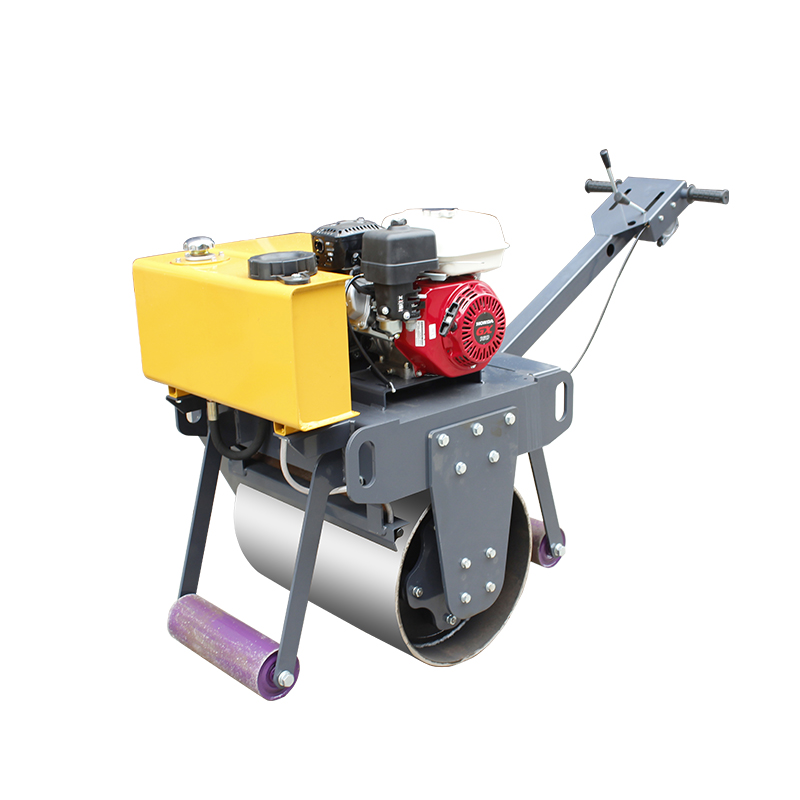
The core purpose of specially treating the surface of a roller's steel drum is to improve operation quality, extend the drum's service life, adapt to the compaction requirements of different materials, and prevent issues such as material sticking to the drum and surface damage during the compaction process.
Special treatment can directly improve the flatness and integrity of materials after compaction, which are key quality requirements for projects such as road construction.
For asphalt materials: The surface is usually subjected to mirror polishing or fine texture treatment. This prevents asphalt from sticking to the steel drum due to high temperatures, ensuring the compacted asphalt pavement has a smooth surface without scratches and reducing the risk of water seepage in the pavement later.
For stabilized soil and gravel: Some steel drums undergo rough texture treatment (e.g., diamond-shaped or striped patterns). By increasing surface friction, this enhances the kneading effect on the materials, helping particles fit more tightly together while preventing the steel drum from slipping on loose materials.
The steel drum is in long-term contact with hard materials (such as gravel and concrete), making it prone to wear and deformation. Special treatment can significantly improve its wear resistance.
Common treatment processes: Surface quenching (to increase surface hardness), overlay welding of wear-resistant alloys (welding a high-hardness alloy layer on easily worn parts), and spraying of wear-resistant coatings (e.g., tungsten carbide coatings).
Practical effects: Reduces scratches and dents on the steel drum caused by rolling hard materials, extends the drum replacement cycle, and lowers equipment maintenance costs.
Different projects have different requirements for compaction effects, and the surface treatment of the steel drum can be targeted to optimize compaction efficiency and results.
Scenarios requiring high flatness (e.g., airport runways, expressway surface layers): Smooth mirror-finish steel drums are used. They make uniform contact with materials during rolling, avoiding pavement undulations caused by surface protrusions.
Scenarios needing enhanced compaction adhesion (e.g., compaction of gravel in the bottom layer of roadbeds): Steel drums with patterns are adopted. The patterns embed into the materials, increasing grip during rolling, preventing the steel drum from idling, and improving deep-layer compaction density.
Rollers often work outdoors and are exposed to corrosive environments such as rainwater and moist soil. Surface treatment can provide rust protection.
Basic treatment steps: Before leaving the factory, the steel drum undergoes rust removal (e.g., sandblasting, pickling), followed by the application of anti-rust primer. Some drums also receive a topcoat or galvanizing treatment.
Practical effects: Prevents the steel drum from peeling and pitting on the surface due to rust, ensuring it maintains a flat rolling surface even after long-term use without affecting compaction quality.



 Chinese