Chinese
- HOME >> NEWS >> Company news
NEWS
Latest Product





Contact Us
What is the difference between the steering structure of a wheeled excavator and a crawler excavator, and what are its advantages?
2026-02-27I. Core Differences in Steering Structure
Steering of Wheeled ExcavatorStructure: steering wheel → steering gear → steering cylinder → tie rod → front wheel deflection
Principle: similar to a car, steering is achieved by changing the wheel angle.
Modes: front-wheel steering / four-wheel steering / crab steering
Features: equipped with steering axle, steering system and suspension; steering logic suitable for road driving.
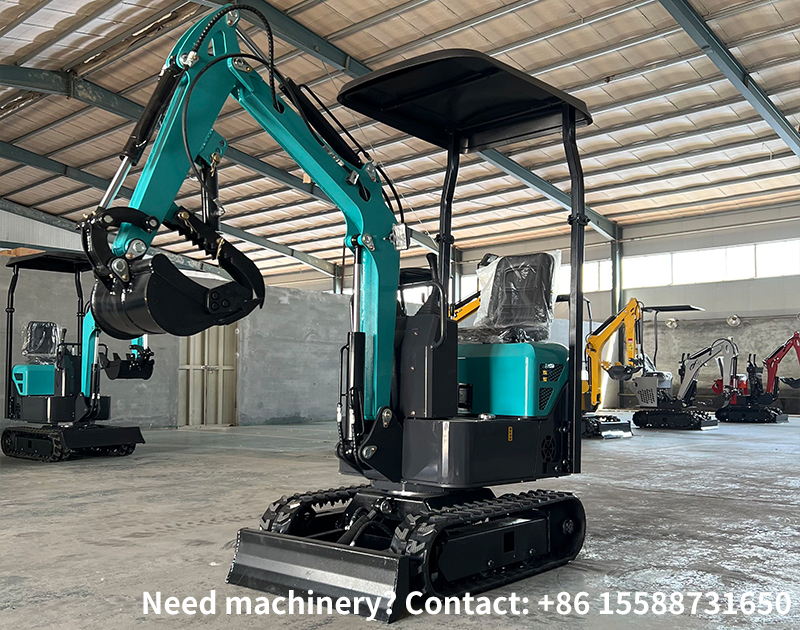
Steering of Crawler ExcavatorStructure: two independent left and right tracks, no steering wheels, no steering axle.
Principle:
One track moves, the other stops → turning
One track forward, the other reverse → pivot steering
Features: steering by speed difference or direction difference, not by wheel deflection.
II. Advantages of Wheeled Steering over Crawler Steering
Safer and more controllable on roads: smooth and linear steering, suitable for road driving, transfer and long-distance movement.
Higher driving speed, no body swing during steering: crawler excavator tends to “drag and slide” when turning, while wheeled steering is smoother and allows higher speed.
More in line with driving habits: operated by steering wheel, easy to learn with low labor intensity.
More flexible on site (with four-wheel / crab steering): able to move sideways in narrow roads, near walls or containers, which crawler excavator cannot do.
Less damage to road surface: crawler steering grinds and damages the road surface, while wheeled excavator hardly harms it.
One-sentence summary for memorization
Wheeled excavator steers by wheel deflection like a car, with advantages of fast road travel, smooth control, no road damage and strong transfer capability; crawler excavator steers by left-right track speed difference, with advantages of pivot turning and no skidding on soft ground.