

 Chinese
- HOME >> NEWS >> Industry news
NEWS
Latest Product
Contact Us
What is an Oscillating Roller? How Does Its Working Principle Differ from a Vibratory Roller?
2025-12-31An oscillating roller is a relatively new compaction technology. Its core difference from a vibratory roller lies in the direction and mode of action of the exciting force.
Definition and Working Principle of an Oscillating Roller
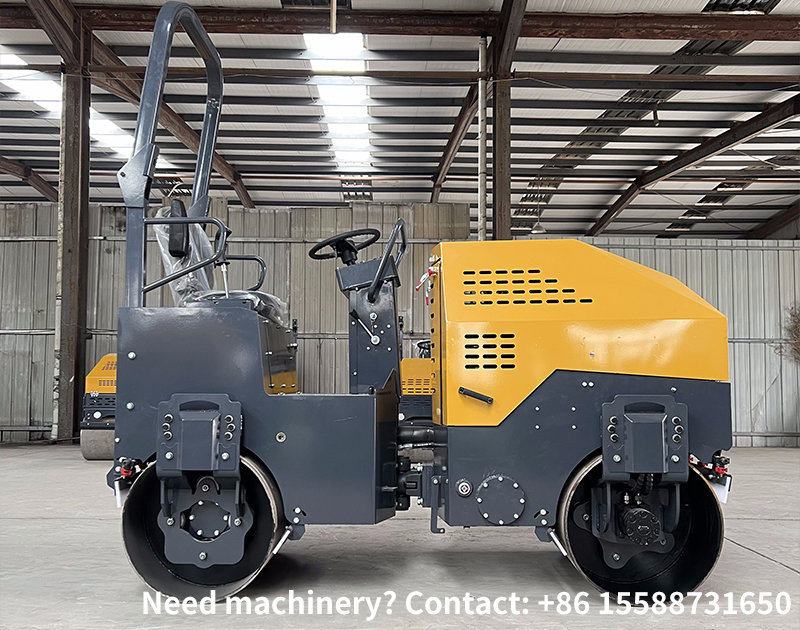
The core component of an oscillating roller is the oscillating drum. Unlike the vertical vibration of a vibratory roller, the vibrator inside the oscillating drum generates a horizontal torsional or oscillating motion.
Its working principle can be understood as follows:
Simply put, an oscillating roller does not "jump" to compact like a vibratory roller; instead, it compacts the material through horizontal kneading and shearing, much like a "washboard."
Core Differences from Vibratory Rollers
The main differences between oscillating rollers and vibratory rollers lie in the direction and mode of action of the exciting force, which also lead to differences in compaction effect, applicable working conditions, and environmental impact.
| Aspect | Vibratory Roller | Oscillating Roller |
|---|---|---|
| Exciting Force Direction | Generates a vertical exciting force, causing the drum and material to vibrate up and down. | Generates a horizontal exciting force, causing the drum to produce torsional motion. |
| Compaction Principle | Causes material particles to resonate through vertical vibration, overcoming friction and cohesion between particles, thereby rearranging and densifying the particles. | Causes material particles to undergo relative displacement through horizontal shearing and kneading, filling voids to achieve densification. |
| Compaction Effect | Achieves greater compaction depth, suitable for deep compaction. However, the vibration effect may be poor for highly cohesive materials. | Provides uniform compaction effect, especially for cohesive materials like asphalt mixtures, achieving higher density and better water damage resistance. Its compaction depth is relatively shallow, but the surface compaction effect is better. |
| Environmental Impact | Vertical vibration generates significant vibration and noise, which may affect surrounding buildings, bridges, and underground pipelines. | Since the exciting force is mainly horizontal, the generated vertical vibration and noise are very small, and the impact on the surrounding environment is much less than that of vibratory rollers. |
| Applicable Working Conditions | Widely used in large-scale earthwork projects such as subgrades and dams, as well as compaction of pavement bases. | Particularly suitable for compaction of asphalt pavement (especially finish rolling), and compaction operations in vibration-sensitive areas (such as near buildings, hospitals, schools, etc.). |
In general, the oscillating roller is a supplement and development of the vibratory roller. While ensuring compaction quality, it greatly reduces the impact on the environment, making it a more environmentally friendly and efficient compaction equipment.