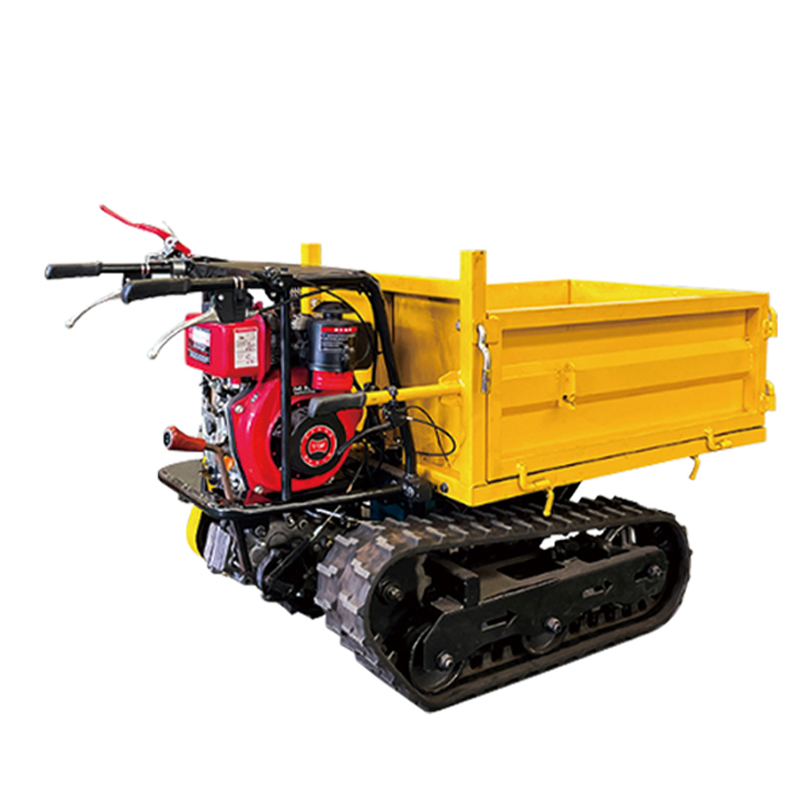
It is not recommended to use a remote-controlled lawn mower on a wet lawn, as this will directly affect the machine's performance and increase the risk of slipping. The specific details are as follows:
Increased risk of component damage: Moisture can penetrate electronic components such as the motor, battery interface, and circuits, potentially causing short circuits, rusting, or malfunctions, and shortening the equipment's service life.
Deteriorated cutting performance: Wet grass tends to stick to the blades and cutting deck, resulting in unsmooth cutting, clogging of grass clippings, and even missed cutting areas or broken grass stems.
Higher maintenance costs: After use, additional effort is required to clean and dry the components; otherwise, residual moisture and grass stains will accelerate blade rusting and wear of the transmission system.
Reduced driving stability: Wet and slippery surfaces decrease the grip of tracks or wheels. This issue is particularly prominent in areas such as slopes and tile edges, where slipping, rollover, or even loss of control of the lawn mower are likely to occur.
Increased operational difficulty: For manually controlled models, frequent adjustments to direction and speed are needed to deal with slipping. For intelligent models, the accuracy of positioning and path planning may also be affected by ground moisture, leading to deviations.
Potential hazards to personnel: If the lawn mower slips and collides with obstacles, or grass clippings splash, it may cause accidental injuries to people nearby.
A remote-controlled lawn mower can only be used briefly when the lawn is "slightly damp" (no standing water on the surface and no mud sticking to shoes when stepping on it) and the area is flat with no slopes.
Before use, it is necessary to wipe off water droplets on the grass blades in advance, reduce the cutting speed, avoid sudden turns and sudden stops. After use, immediately cut off the power, clean the machine, and dry it thoroughly.



 Chinese