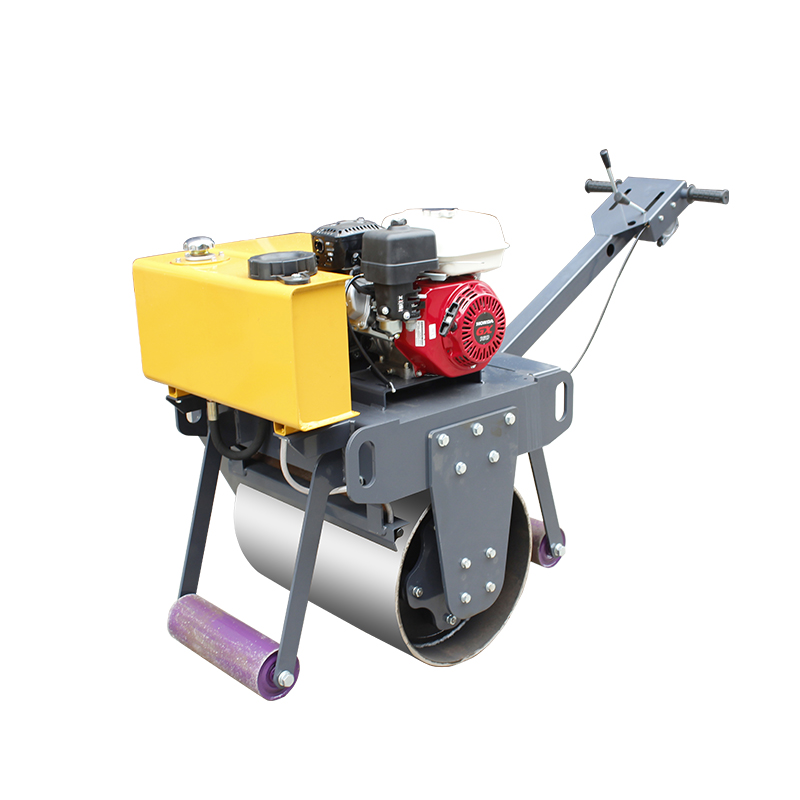
When rollers compact subgrades (earthfill/rockfill), they shall comply with current industry specifications (JTG/T 3610-2019 for highways; CJJ 1-2008 for urban roads). The core principles are layered filling, light compaction before heavy compaction, edge compaction before center compaction, slow speed before fast speed, wheel track overlapping, parameter determination via test sections, as well as strict control of moisture content/particle size and compliance with inspection & acceptance standards.
Highway SubgradesThe Technical Specifications for Highway Subgrade Construction (JTG/T 3610-2019) applies to the construction and reconstruction of highways at all levels, specifying requirements for layering, compaction and inspection of earthfill, rockfill and soil-rock mixed fill subgrades.
Urban RoadsThe Code for Construction and Quality Acceptance of Urban Road Engineering (CJJ 1-2008) applies to urban arterial roads, collector roads, etc., with detailed provisions on rolling speed, equipment selection and structure protection during subgrade compaction.
Auxiliary StandardsStandards such as the Specifications for Quality Inspection and Assessment of Highway Engineering (JTG F80/1) and the Code for Construction and Acceptance of Water Supply and Drainage Pipeline Engineering (GB 50268) are used for subgrade inspection and backfilling around structures.
Filler and Moisture Content ControlFillers shall meet requirements for strength (CBR value), particle size and organic matter content. The moisture content of fine-grained soils should be controlled within ±2% of the optimal moisture content. If the moisture content is too high or too low, the filler shall be dried or sprinkled with water for adjustment to avoid springing, peeling or scabbing.
Layered filling shall be adopted, with loose laying thickness determined by equipment and filler type: for heavy-duty vibratory rollers, the loose laying thickness is generally ≤ 30 cm; for oversize-grained soils or gravels, the thickness may be appropriately increased, but must be verified via test sections. Excessive thickness paving is strictly prohibited.
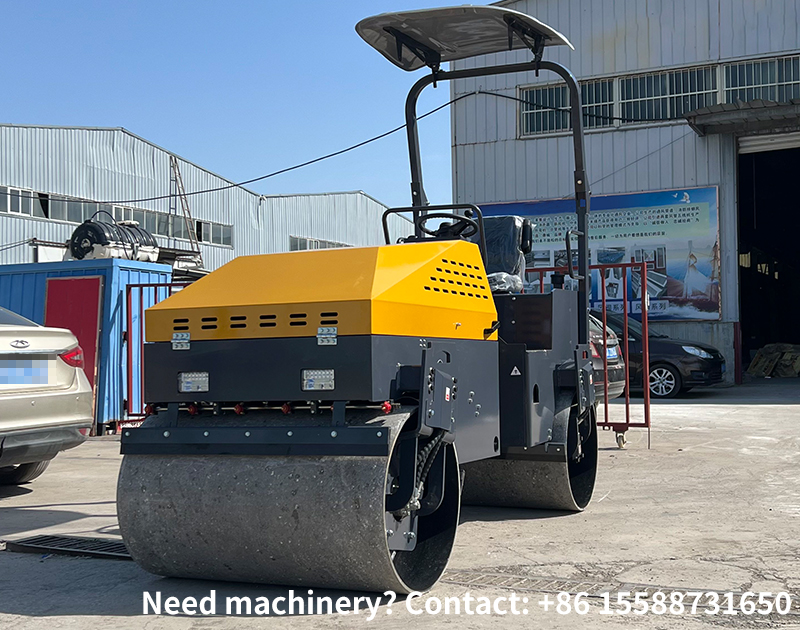
Equipment Selection and Rolling ParametersHeavy-duty vibratory rollers ≥ 18 t are preferred. Initial compaction may use light static rolling for stabilization; re-compaction adopts vibratory rolling; final compaction applies static rolling for surface finishing to eliminate wheel tracks.
Rolling sequence: compact edges first then the center; for curved sections, compact the inner side first then the outer side. Wheel track overlap shall be ≥ 1/3 of the wheel width, and longitudinal lap joint ≥ 2 m to avoid missed compaction in blind spots.
Speed control: initial/re-compaction speed shall be 2–3 km/h; final compaction speed ≤ 4 km/h. High-speed rolling (> 6 km/h) is strictly prohibited for core compaction procedures.
Rolling passes: determined by test sections. The typical process is 1–2 passes of static rolling → low-amplitude vibration → high-amplitude vibration → static rolling for finishing, until the target compaction degree is achieved, the surface is smooth and free of obvious wheel tracks.
Special Areas and Structure ProtectionFor blind spots inaccessible to rollers (e.g., abutment backfills, subgrade corners), small vibratory rammers or impact rammers shall be used for layered compaction, with each layer thickness ≤ 15 cm and lap joint with the main subgrade ≥ 2 m. Static rolling with rollers is only allowed for areas ≥ 50 cm above the top of pipelines to prevent pipeline damage caused by vibration.
For steep slope sections, step excavation (step height ≤ 30 cm, step width ≥ 1 m) shall be conducted before layered filling and compaction to prevent subgrade sliding.
Inspection and AcceptanceThe primary control index is compaction degree, which shall be graded according to design requirements and specifications (e.g., compaction degree ≥ 96% for the upper subgrade bed of expressways/first-class highways). Common testing methods include the sand replacement method and ring knife method; nuclear density gauges are used for rapid sampling inspection. Testing frequency shall comply with specification requirements.
Appearance quality: the subgrade surface shall be smooth, free of mud pumping, peeling, waviness or shoving; the edges shall be stable without collapse.
Filler and Particle Size ControlThe strength of stone materials shall be ≥ 15 MPa. For the layer 0–50 cm below the subgrade bed surface, the maximum particle size shall be ≤ 10 cm; for other layers, the maximum particle size shall be ≤ 2/3 of the layer thickness. Large rock blocks shall be evenly distributed, and gaps between blocks shall be filled and compacted with small stones or stone chips.
Layered filling shall be adopted, with loose laying thickness determined by test sections. For heavy-duty vibratory rollers, the loose laying thickness is generally ≤ 40 cm; excessive thickness paving is strictly prohibited. Slope masonry shall be carried out synchronously with filling to ensure slope stability.
Equipment Selection and Rolling ParametersHeavy-duty vibratory rollers ≥ 18 t (preferably ≥ 25 t) are preferred; impact rollers may be used for supplementary compaction if necessary. Lightweight equipment shall be avoided to ensure adequate interlocking and compaction of rockfill materials.
Rolling sequence and overlap requirements are the same as those for earthfill subgrades; rolling speed shall be 2–4 km/h. The process involves initial static rolling for stabilization, re-compaction with high-amplitude vibration, and final static rolling for surface finishing. The number of passes is determined by test sections, until settlement stabilizes and no obvious wheel tracks are observed.
Special Areas and Supplementary CompactionSmall compactors shall be used for supplementary compaction in blind spots such as subgrade corners and abutment backfills. For high-fill subgrades or sections with unstable settlement, impact rollers are adopted for supplementary compaction, with impact energy and number of passes strictly controlled to prevent damage to structures.
Inspection and AcceptanceThe primary control indices are porosity and settlement difference, in accordance with JTG/T 3610-2019. Settlement difference refers to the elevation difference before and after each rolling pass. After final compaction, the settlement difference between adjacent measurement points should be ≤ 3 mm, and no significant settlement occurs for 2 consecutive passes.
Appearance quality: the surface shall be smooth, rock blocks shall be stable without loosening, and slopes shall be straight and compact.
Test Section PriorityA test section must be constructed before formal construction to determine key parameters including loose laying thickness, rolling speed, number of passes, vibration excitation parameters, and control values for settlement difference/compaction degree. These parameters shall serve as the basis for large-area construction.
Winter and Rainy Season ConstructionAvoid filling with frozen soil in winter; sprinkle water timely for moisture retention in high-temperature summer. Implement proper drainage measures in rainy seasons, and strictly prohibit compaction on waterlogged or muddy layers.
Safety and Environmental ProtectionSet up warning zones during roller operation and prohibit personnel from entering. Avoid sudden braking or U-turns that may disturb the compacted layers. Sprinkle water to reduce dust on dusty sections, and dispose of spoil in accordance with regulations.
Determine applicable specifications (highway/urban road) and clarify design targets for compaction degree/porosity.
Construct test sections to finalize parameters: loose laying thickness, rolling speed, number of passes, vibration excitation parameters and testing methods.
Conduct layered paving → initial static stabilization → re-compaction for densification → final static finishing, strictly following the specified sequence and overlap width.
Adopt special treatment measures for special areas; control backfilling and compaction around structures in accordance with GB 50268.
Perform inspections at specified frequencies; proceed to the next layer of filling only after the current layer is accepted as qualified.


 Chinese