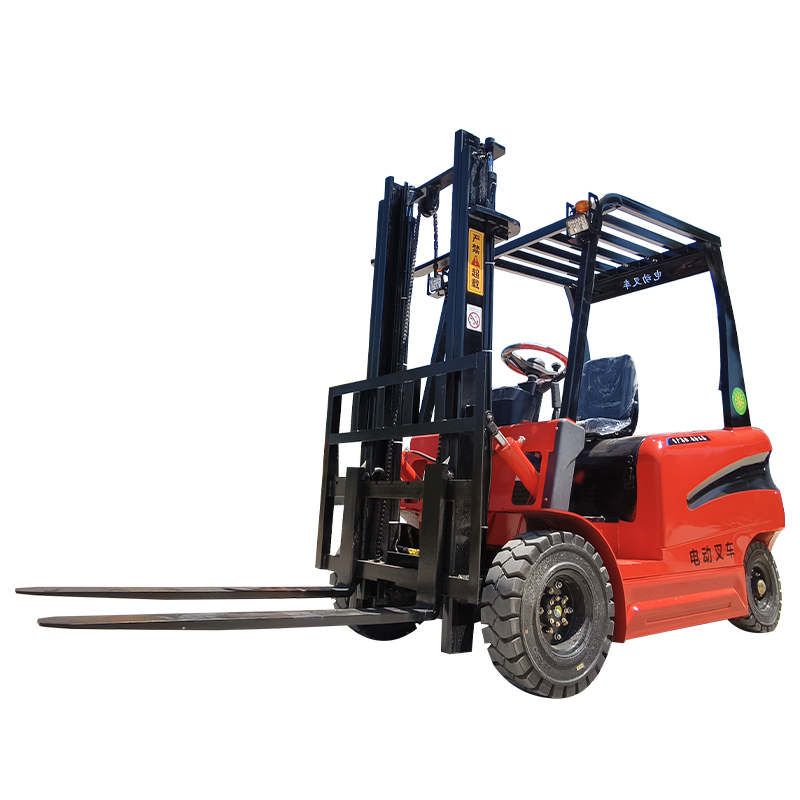
This question is crucial as it directly relates to the operational efficiency and reliability of electric forklifts in low-temperature environments. Low temperatures can significantly reduce battery life and performance, mainly manifested in reduced capacity, decreased charge-discharge efficiency, and in severe cases, even potential battery damage.
Significant Reduction in Battery Life: Low temperatures slow down the reaction rate of the active substances in the battery, resulting in a decrease in the actual usable power. Typically, in an environment of -10°C, the battery life may only be 50%-70% of that at room temperature; the lower the temperature, the more obvious the battery life attenuation.
Notable Decline in Charge-Discharge Efficiency: During charging, low temperatures reduce the battery's ability to accept charges, which not only prolongs the charging time but may also lead to an "undercharged" situation. During discharge, the motor requires more power to maintain normal operation, further accelerating power consumption.
Accelerated Aging of Battery Lifespan: Frequent charge-discharge cycles in low-temperature environments over the long term can cause internal crystallization of the battery or electrode passivation, shortening the battery's cycle life. A battery that originally could be used for 3-5 years may need to be replaced after just 2-3 years.
Weakened Startup and Power Performance: Low temperatures increase the internal resistance of the battery, leading to insufficient output current during startup. The forklift may experience difficulties in starting, lack of power when climbing slopes, and slow acceleration, all of which affect operational efficiency.
Prioritize the use of batteries with better low-temperature performance, such as lithium iron phosphate batteries. Their low-temperature stability is superior to that of traditional lead-acid batteries, and some manufacturers also equip the batteries with heating plates.
After operation, promptly move the battery to an indoor environment with a temperature of 5°C-25°C for storage. Avoid leaving the battery in a low-temperature environment for an extended period to reduce self-discharge of power.
Ensure the battery temperature rises to above 10°C before charging. If conditions permit, use a charger with a low-temperature preheating function to avoid irreversible damage to the battery caused by charging at low temperatures.
Conduct a "preheating" process before operation: After starting the forklift, let it run without a load for 5-10 minutes. Begin load operation only after the temperatures of the battery and motor have risen slightly.
Optimize operating habits: Avoid rapid acceleration, sudden braking, and prolonged high-speed driving. Try to maintain steady-speed operation to reduce the impact of instantaneous high-power discharge on the battery.
Plan the operation process reasonably: Arrange high-load and high-energy-consumption tasks (such as climbing slopes and transporting heavy goods) in the early stage when the battery has sufficient power, to avoid efficiency decline due to insufficient power in the later stage.
Install thermal insulation devices, such as thermal insulation cotton or heating blankets, in the forklift's battery compartment or operation area, or build temporary warm sheds to reduce direct contact between the battery and the low-temperature environment.
Regularly inspect the battery connection wires and terminals to ensure good contact. Avoid increased additional internal resistance due to poor contact, which would exacerbate power consumption.
If the forklift needs to operate in an extremely low-temperature environment below -20°C for a long time, choose a cold-resistant electric forklift specially designed for low temperatures. Such forklifts usually have special protection for the battery, motor, and electronic control system.



 Chinese