
 Chinese
- HOME >> NEWS >> Company news
NEWS
Latest Product
Contact Us
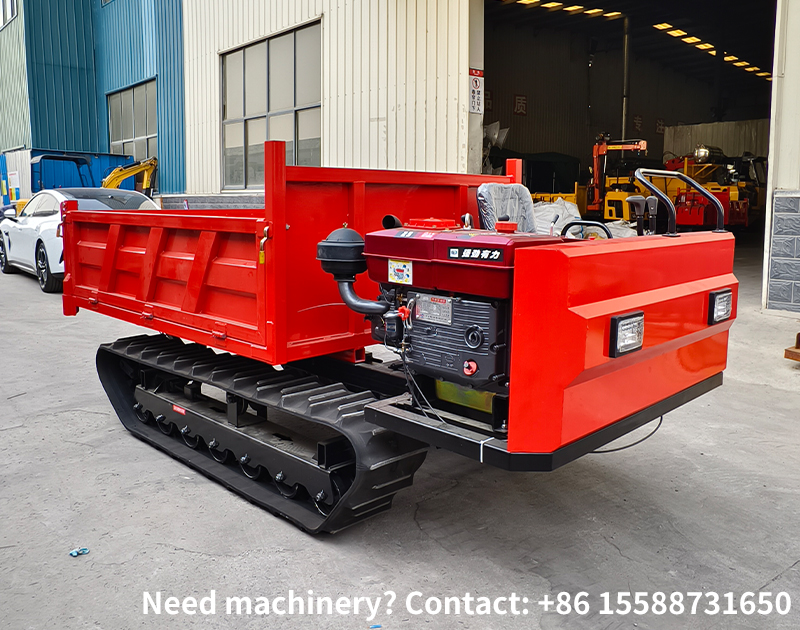
What Are the Specific Application Scenarios of Tracked Carriers in Agriculture?
2026-02-05I. Core Field Transportation Scenarios
Grain & Cash Crop Transportation: During the harvest season of rice, wheat, corn, fruits and vegetables, transport harvested produce in muddy paddy fields and wet plots. Replace wheeled carriers to avoid getting stuck, support grain receiving from combine harvesters, and provide short-haul transport to field edges or drying stations.
Agricultural Materials Delivery: Transport production materials such as chemical fertilizers, pesticides, agricultural films and seedlings directly to field edges. Adapt to hilly areas, terraced fields, peripheral areas of greenhouses and other regions inaccessible to wheeled vehicles, reducing manual shoulder carrying.
Straw & Branch Removal: Collect and transport crop straw, fruit tree branches and waste agricultural films, supporting straw returning to fields and resource recycling. Tracked carriers cause less compaction damage to farmland.
II. Operations in Hilly, Mountainous and Special Terrains
Terraced & Sloped Field Operations: Adapt to material transportation in mountain terraces and gentle-slope orchards. Rely on strong climbing capacity for uphill and downhill transport, eliminating the risks of slipping and rollover faced by wheeled vehicles.
Paddy Field & Wetland Operations: Low ground contact pressure suits rice fields, lotus root fields and paludified farmland, preventing vehicle sinking and damage to field ridges and tillage layers. Can be equipped with auxiliary tools for rice transplanting and plant protection for short-distance transshipment.
Greenhouse & Protected Agriculture: Narrow-body mini tracked carriers access greenhouses and multi-span sheds to transport substrates, potted plants and harvested fruits and vegetables. Pivot turning adapts to narrow passages inside sheds.
III. Special Applications in Fruit and Forestry
Orchard Harvesting & Fertilization Transport: Transport fresh fruits, organic fertilizers and bagging materials in orchards of citrus, apples, kiwifruit and others, avoiding compaction of fruit tree root systems by wheeled vehicles. Can be fitted with lifting buckets to assist harvesting and pruning.
Woodland Seedling & Logging Auxiliary Transport: Transport seedlings and nutrient soil in mountain nurseries; transport branches and small-diameter timber in small-scale logging of economic forests, adapting to rugged forest paths.
IV. Agricultural Engineering and Field Management
Farmland Infrastructure Support: Transport sand, gravel, cement and pipes for farmland water conservancy, irrigation canal repair and field ridge reinforcement, adapting to unsurfaced construction access roads.
Plant Protection & Irrigation & Drainage Support: Equipped with small water pumps, sprayers and generator sets to realize emergency waterlogging drainage and mobile plant protection spraying in mountainous/paddy fields, with flexible transshipment unrestricted by road conditions.
V. Supporting Applications in Animal Husbandry and Aquaculture
Livestock and Poultry Farming: Transport feed, bedding materials and livestock manure, adapting to muddy and manure-polluted roads in farms, with convenient cleaning and maintenance.
Aquaculture: Transport fishery drugs, feed and aeration equipment around fish and shrimp ponds. Travel stably on soft pond ridge roads, and assist in the transport of fishing supplies.
VI. Key Model Selection Points for Agricultural Adaptation
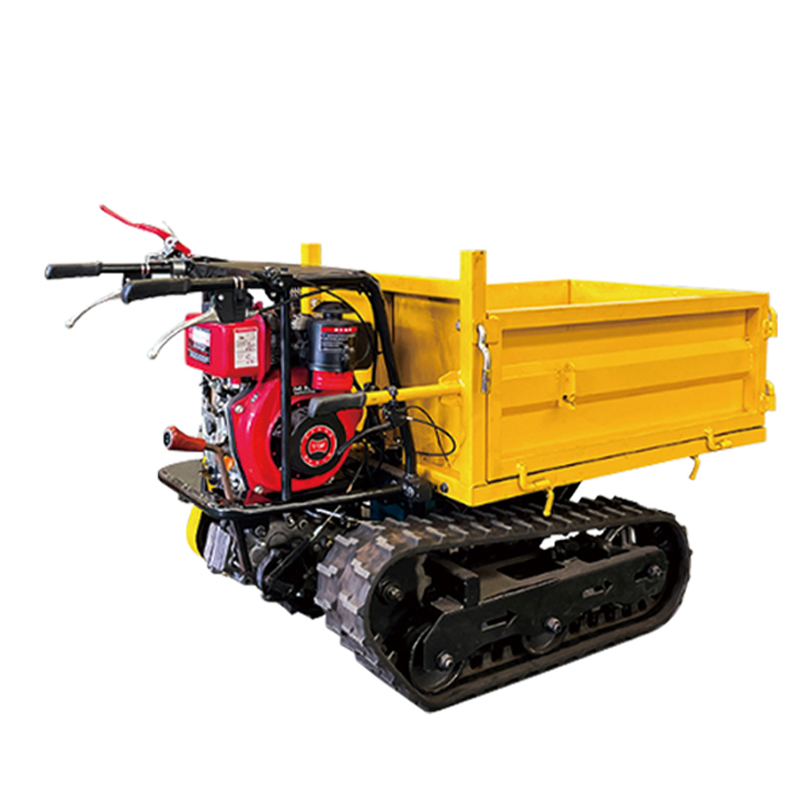
Small Walk-Behind / 1–3t Models: Focus on greenhouses, terraced fields and small-scale farmer plots, featuring flexibility and portability.
Medium 3–6t Models: Adapt to large-scale planting, orchards and mountain farms, delivering high efficiency for heavy loads.
Core Advantages: Passability on soft ground, low farmland compaction, and pivot turning, perfectly compensating for the terrain limitations of wheeled agricultural vehicles.