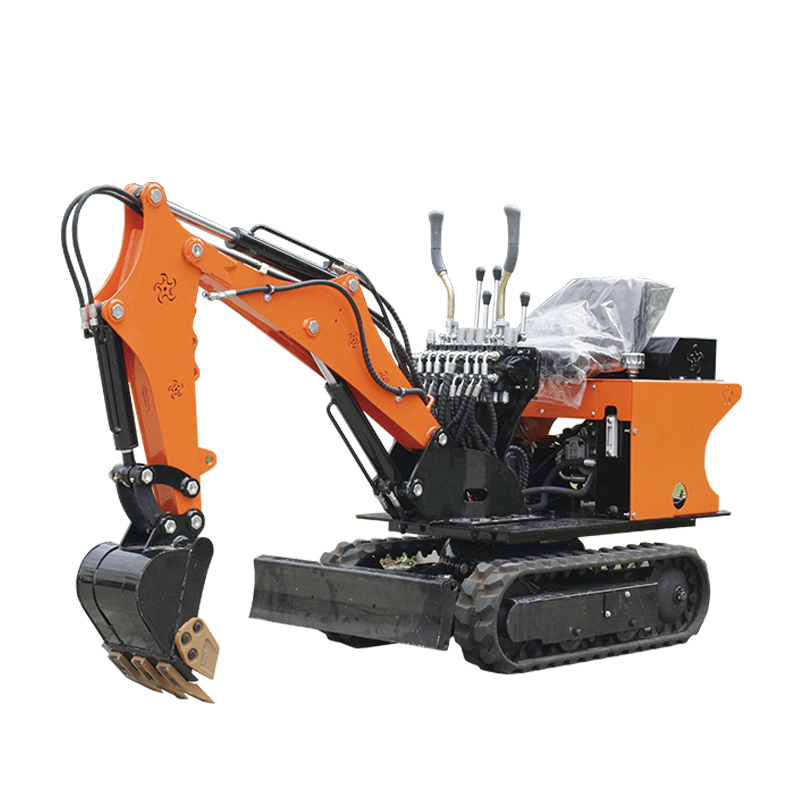
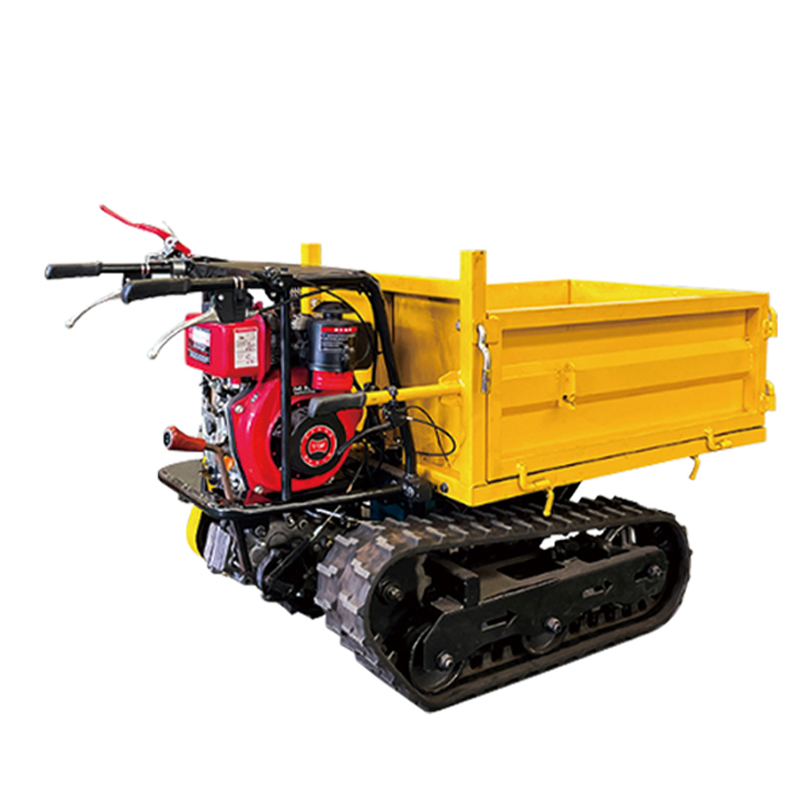
The track materials of tracked transport vehicles are mainly rubber tracks and steel tracks, while composite material tracks are used in some scenarios. The choice of material is directly related to the operating environment.
Rubber tracks: The core material is natural rubber + framework materials (nylon cords, steel wires). They are lightweight, low-noise, and cause little damage to road surfaces (such as orchard and scenic spot roads). Suitable for conventional complex terrains like mountains, snowfields, and muddy areas, they are mostly used in agriculture, cultural tourism, and light engineering scenarios.
Steel tracks: Based on high-strength steel, their surface may be welded with anti-slip teeth or wear-resistant liners. They have strong load-bearing capacity and excellent wear resistance, making them suitable for high-intensity operation scenarios such as mines, heavy engineering, and complex mountainous areas. However, they are heavy, high-noise, and prone to damaging hard road surfaces.
Composite material tracks: Combining the advantages of rubber and steel, the main body of the track plate is made of rubber, and the key stress-bearing parts are embedded with steel wear-resistant components. They balance wear resistance and road-friendliness, and are suitable for mixed working conditions such as medium-sized engineering and forestry.
For light operations (agriculture, cultural tourism), rubber tracks are preferred, focusing on flexibility and road surface protection.
For heavy operations (mines, heavy engineering), steel tracks are selected to ensure load-bearing capacity and durability.
For mixed working conditions (forestry, medium-sized infrastructure), composite material tracks can be chosen to balance performance and practicality.



 Chinese