
 Chinese
- HOME >> NEWS >> Company news
NEWS
Latest Product
Contact Us
What Are the Requirements for the Track Placement of a Tracked Excavator When Performing Deep Foundation Pit Excavation?
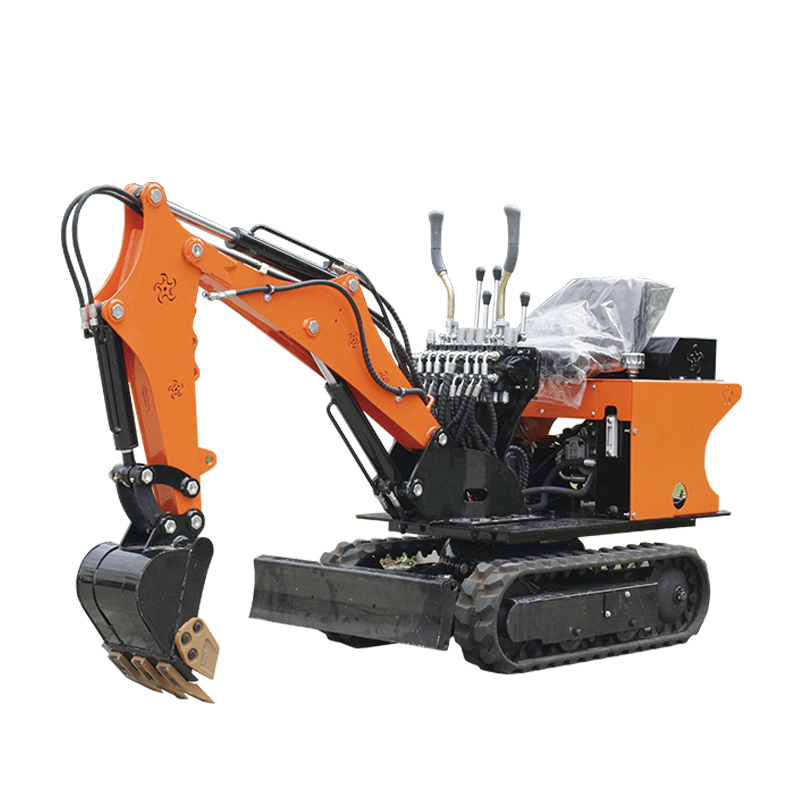
2025-12-04When a tracked excavator performs deep foundation pit excavation, the core requirements for track placement are "stable load-bearing, keeping away from slope edges, and precise alignment". These requirements not only prevent the excavator from sinking or rolling over due to unstable ground but also avoid slope collapse caused by disturbing the foundation pit slope during operation, while ensuring the continuity of excavation movements. Standards must be formulated from three dimensions—basic placement requirements, specific position specifications, and adjustments for special scenarios—considering factors such as foundation pit depth, slope gradient, and ground bearing capacity. The details are as follows:
Basic Track Placement Requirements: Laying a Stable Foundation
1. Qualified Ground Bearing Capacity
The area where the tracks are placed must be compacted and solid. It is strictly prohibited to park on soft areas such as loose sand, backfill soil, or waterlogged depressions. If the ground bearing capacity is insufficient, steel plates, subgrade plates, or gravel cushions should be laid in advance. The coverage area of the cushion must be 1.2 times larger than the track contact area to ensure uniform ground contact pressure and prevent local sinking.
2. Horizontal and Centered Machine Body
After parking, adjust the track position to keep the machine body absolutely horizontal (the cab level can be used for reference). The height difference between the contact surfaces of the left and right tracks must not exceed 5cm. It is strictly prohibited to park and operate on sloped ground, as this may cause the center of gravity to shift and lead to rollover during excavation.
3. Appropriate Track Tension
Check the track tension before operation. The ideal tension is such that "pressing the middle of the track results in a sag of 10-20mm". Excessively loose tracks may slip or shift, while overly tight tracks increase ground contact pressure and damage the stability of the parking ground.
Specific Position Specifications: Precisely Controlling Safety Distances and Alignment
1. Keep Away from Foundation Pit Slopes and Maintain Sufficient Safety Distance
This is a core requirement. The distance between the inner edge of the track and the top of the foundation pit slope must be strictly controlled based on the pit depth and slope gradient:
If the slope adopts a support structure (such as steel sheet piles or soil nailing walls), the distance can be appropriately reduced but must still be no less than 1m to prevent the track from rolling over and damaging the support structure.
2. Tracks Parallel to the Excavation Direction
When parking, align the track direction with the foundation pit excavation direction. This ensures that the operating trajectory of the excavator's boom and arm coordinates with the track direction during excavation, reducing lateral force on the machine body. It is strictly prohibited to park the tracks horizontally facing the foundation pit slope, as the lateral force during excavation will significantly increase the risk of rollover.
3. Reserve Space for Operation and Evacuation
The track placement position must reserve sufficient space for the excavator's slewing and movement. The distance between the machine body and surrounding obstacles (such as tower cranes, pipelines, and construction machinery) shall be no less than 1m. At the same time, plan an emergency evacuation route to ensure the excavator can quickly drive out of the dangerous area if sudden incidents (such as slope landslides) occur in the foundation pit.
4. Avoid Unilateral Track Suspension or Uneven Force Bearing
When parking, ensure both tracks are fully in contact with the ground and the support rollers bear force evenly. It is strictly prohibited to have one track pressing on a protrusion while the other is in a depression, or to have part of the track suspended. If the ground in the operation area is uneven, level the ground first before parking.
Track Placement Adjustments for Special Scenarios: Adapting to Complex Working Conditions
1. Layered Excavation of Deep Foundation Pits
During layered excavation, the track placement position must be adjusted according to the excavation depth.
2. Loads Around the Foundation Pit
If there are loads (such as construction materials and transport vehicles) around the top of the foundation pit slope, the track placement position must avoid the load-affected area. The distance from the track to the load storage area shall be no less than 2m to prevent soil settlement under the tracks caused by load extrusion on the ground.
3. Rainy Seasons or Areas with Abundant Groundwater
Drainage measures must be implemented in the parking area. Dig drainage ditches on both sides of the tracks to prevent rainwater from soaking the ground and softening the soil. At the same time, lay anti-slip pads under the tracks to enhance track grip and prevent slipping or displacement.