

 Chinese
- HOME >> NEWS >> Industry news
NEWS
Latest Product
Contact Us
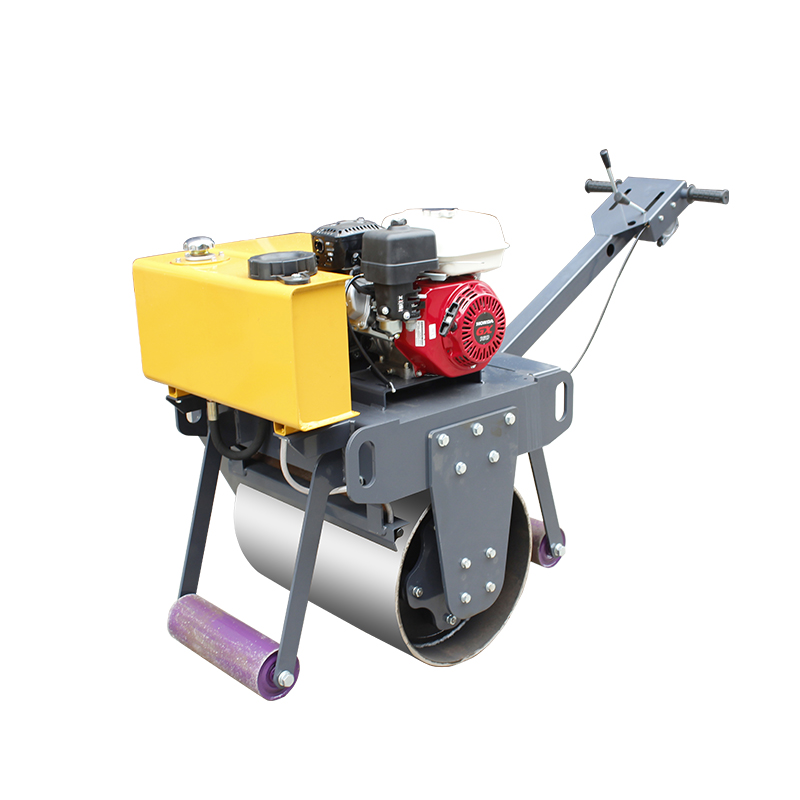
What Roles Do the "Iron Triangle" of a Road Roller (Engine, Hydraulic System, Vibratory Drum) Play?
2025-12-31The "Iron Triangle" of a road roller—Engine, Hydraulic System, and Vibratory Drum—constitutes its core power and work execution system. With clear division of labor and coordinated linkage, the three together determine the compaction performance and operational efficiency of the road roller.
1. Engine: The Power Core and Energy Source
The engine is the "heart" of the road roller, providing raw power for all functions of the machine. Its performance directly affects the operational capability and stability of the road roller.
Core Role: Convert the chemical energy of fuel (mainly diesel) into mechanical energy and output stable power torque.
Main Tasks:
Key Impact: The power and torque curve of the engine determine the road roller's climbing ability, operating speed, and continuous working time under different working conditions. A high-power engine is more suitable for heavy-duty, deep compaction scenarios (e.g., subgrade engineering).
2. Hydraulic System: The Power Transmission Hub and Precision Control Core
The hydraulic system is the "bridge" connecting the engine and various executive components. It is responsible for converting the mechanical energy of the engine into hydraulic energy and achieving efficient power distribution and precise control.
Core Role: Through the pressure transmission of hydraulic oil, distribute the engine's power to the vibratory drum, travel motor, steering system, etc., as needed, while realizing flexible adjustment of operating parameters.
Main Tasks:
Key Impact: The stability of pressure and flow in the hydraulic system directly determines the magnitude of the exciting force of the vibratory drum, the accuracy of vibration frequency, and the response speed of the travel system. A high-performance hydraulic system can reduce power loss and improve compaction uniformity.
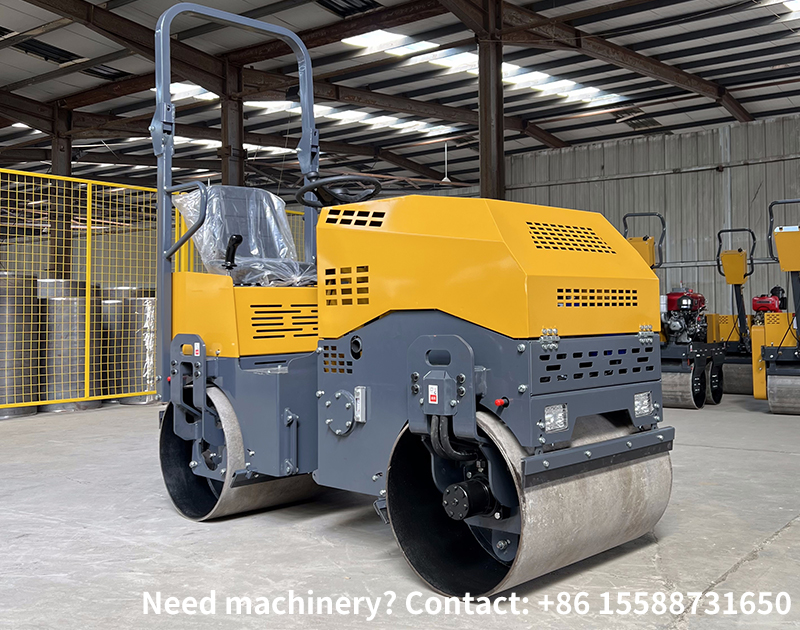
3. Vibratory Drum: The Operational Execution Terminal and Direct Achiever of Compaction Effect
The vibratory drum is the "tool head" of the road roller that directly contacts the material being compacted. Its structure and vibration characteristics determine the compaction depth, efficiency, and road surface smoothness.
Core Role: Convert the power transmitted by the hydraulic system into mechanical action (static pressure + vibration/oscillation force) on the material to complete the compaction operation.
Main Tasks:
Key Impact: The weight, diameter, vibration frequency, and magnitude of exciting force of the vibratory drum directly determine the compaction depth (the greater the exciting force and the higher the frequency, the deeper the compaction) and operational efficiency. Different types of vibratory drums (e.g., single/double drum, smooth drum/tire drum) are suitable for different materials and working conditions.
Coordination Among the Three
The engine outputs power → the hydraulic system converts the power into controllable hydraulic energy and distributes it to executive components such as the vibratory drum → the vibratory drum converts the hydraulic energy into mechanical compaction force to complete the operation. Among them, the hydraulic system acts as the "coordinator", responsible for accurately distributing power according to operational needs (e.g., adjusting vibration frequency, travel speed), ensuring that the engine's power is efficiently transmitted to the vibratory drum, and realizing a closed loop of "power output - precise control - efficient compaction".