

 Chinese
- HOME >> NEWS >> Industry news
NEWS
Latest Product
Contact Us
What are the differences in the application priorities of tracked transporters in different fields such as agriculture, mining, and engineering construction?
2026-01-10The application of tracked transporters in the three major fields of agriculture, mining, and engineering construction is centered on matching the operational requirements, terrain characteristics, and load capacity requirements of different scenarios, with remarkably distinct priorities, detailed as follows:
Agriculture Field: Lightweight, Low-damage, and Flexible
Track Selection: Rubber tracks are preferred, with the ground contact pressure controlled within 0.1 MPa, to avoid soil compaction that affects crop growth and prevent damage to fruit tree root systems caused by rolling.
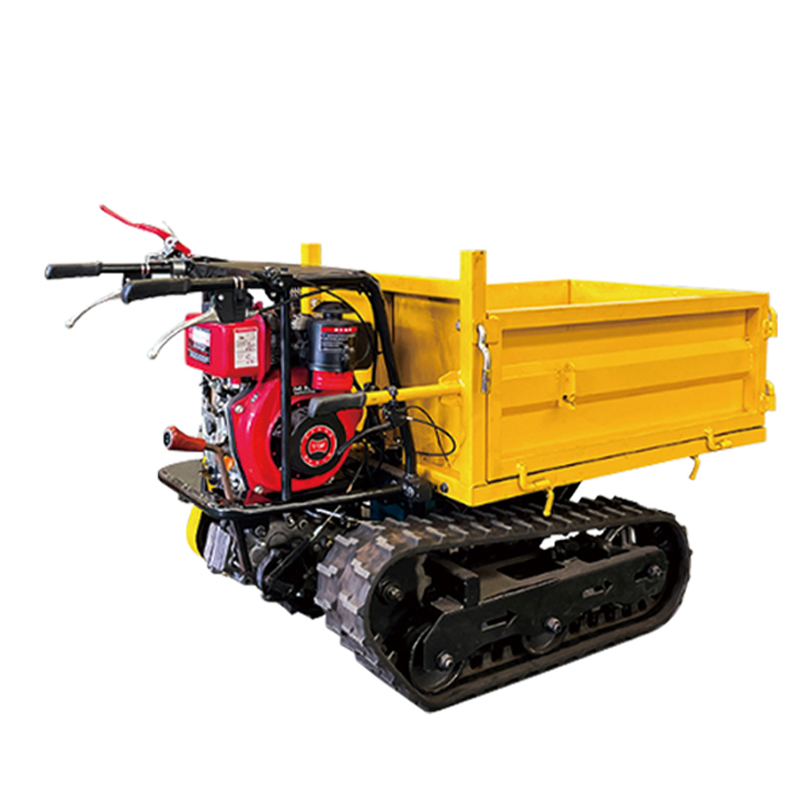
Vehicle Model: Small-sized and narrow-body models (with a width of 1–1.5 m) are mainly adopted, suitable for narrow spaces such as orchard row spacing and terraced paths. Some models can be equipped with hydraulic lifting and unloading devices to facilitate the loading and unloading of fertilizers and fruits.
Power Configuration: Low-noise and low-emission diesel engines or electric motors are preferred, meeting the environmental protection requirements of farmlands and orchards and avoiding crop pollution caused by exhaust gas.
Core Requirements: Adapt to soft/narrow terrains such as farmlands, orchards, and mountainous areas, reduce damage to soil and crops, and meet the short-distance transportation needs of agricultural materials and products.
Typical Scenarios: Transportation of rice seedlings/chemical fertilizers in paddy fields, fruit transfer in mountain orchards, short-distance distribution of greenhouse vegetables, and straw recycling and transportation in swamps.
Mining Field: Heavy-load, Wear-resistant, and Impact-resistant
Track Selection: Steel tracks (some made of high manganese steel) must be used, with track shoes equipped with deep anti-skid teeth to enhance adhesion to gravel roads and resist scratches and impacts from the edges and corners of ore.
Vehicle Model: Medium-heavy and heavy-load models are mainly used (with a load capacity of 10–50 tons), featuring reinforced chassis structures and a ground clearance of ≥ 30 cm, capable of crossing obstacles such as ore piles and trenches.
Safety Configuration: Equipped with reinforced braking systems and anti-rollover devices to meet the climbing and braking requirements of steep slopes above 30° in mines. Some models are fitted with protective barriers to prevent vehicle damage caused by falling ore.
Core Requirements: Cope with harsh terrains such as gravel roads, steep slopes, and deep pits in mines, undertake heavy-load transportation of ore, muck, and equipment parts, and balance durability and safety.
Typical Scenarios: Muck transportation in open-pit mines, underground ore transfer, delivery of maintenance parts for mining equipment, and transportation of emergency rescue materials in collapsed road sections.
Engineering Construction Field: Multi-functional, Universal, and Efficient
Track Selection: Flexible track material selection is available—rubber tracks are chosen for urban construction sites with a high proportion of hardened roads (to protect the pavement); steel tracks are adopted for mountain construction sites dominated by gravel roads (to improve wear resistance); composite tracks are applicable for mixed road conditions.
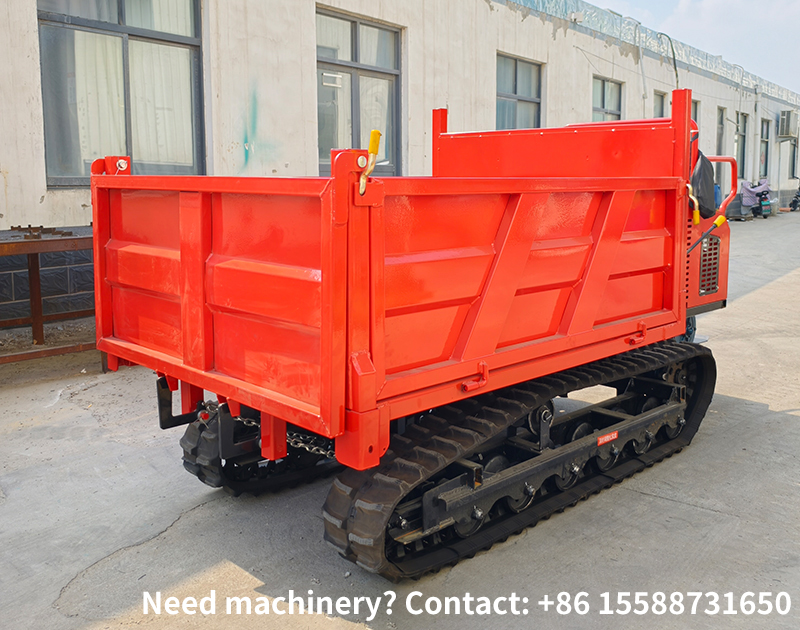
Vehicle Model: Covering the full tonnage range (small-sized: 1–5 tons, medium-sized: 5–15 tons, heavy-duty: 15–30 tons). Small-sized vehicles are used for transporting construction tools and scattered building materials; medium-heavy vehicles are for bulk transportation of sand, steel bars, and prefabricated components.
Modification Capability: Support multi-functional modifications, such as installing dump truck bodies, lifting arms, and bulldozer blades, enabling one vehicle to serve multiple purposes—transporting materials, assisting in site leveling, and lifting small-scale equipment.
Core Requirements: Adapt to complex road conditions at construction sites (mixed mud, potholes, and gravel), meet the transportation needs of various types of goods including building materials, tools, and construction waste, and balance the adaptability to switching between different construction sites.
Typical Scenarios: Transportation of brackets for mountain photovoltaic power stations, transfer of steel bars at bridge construction sites, delivery of building materials for new rural construction, and clearance of construction waste at demolition sites.