

 Chinese
- HOME >> NEWS >> Industry news
NEWS
Latest Product
Contact Us
What are the main track materials of tracked transporters, and what working conditions are different materials suitable for?
2026-01-10The track material of a tracked transporter directly determines its wear resistance, impact resistance and applicable working conditions. Mainstream materials can be divided into two categories: rubber tracks and steel tracks, and composite tracks are adopted for some working conditions. The specific classification and applicable scenarios are as follows:
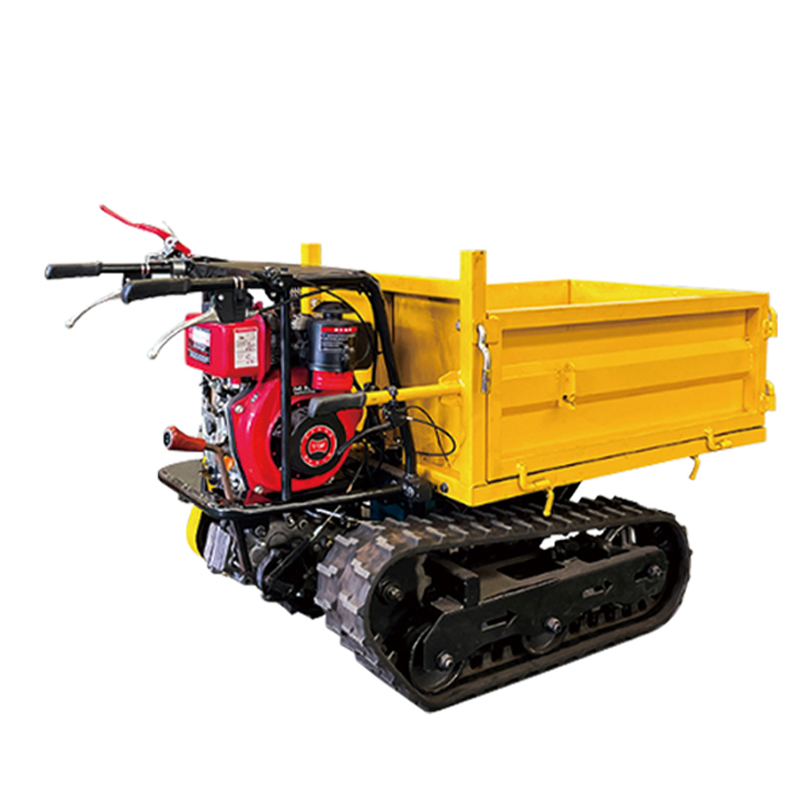
Rubber tracks are mainly composed of a rubber matrix + multi-layer fiber cord fabric/steel wire skeleton, which have both elasticity and toughness, with the advantages of light weight and low noise.
Agricultural scenarios: Transportation of agricultural materials and fruits in paddy fields, orchards, greenhouses and plain farmland, which can avoid crushing and damaging soil structure and crops.
Municipal and small-scale engineering: Transportation of urban greening seedlings and removal of construction waste in residential areas, featuring low noise and no damage to cement/asphalt pavement.
Small-scale tracked equipment: Suitable for 1–5 ton light-duty tracked transporters, and applicable to short-distance, light-load and low-impact operating environments.
Subtypes and characteristics of rubber tracks
Ordinary rubber tracks: Low cost, good elasticity and no damage to pavement.
Reinforced rubber tracks: Steel wires or high-strength fiber layers are added inside, which have stronger tear resistance and tensile resistance.
Limitations: Poor resistance to puncture by sharp objects, not suitable for scenarios with many sharp objects such as gravel and mines; high temperature resistance and wear resistance are inferior to those of steel tracks.
Steel tracks are assembled from steel track shoes, track pins and track links, featuring high hardness, strong impact resistance and excellent wear resistance, which are the core choice for heavy-duty tracked transporters.
Mining and heavy-duty engineering: Transportation of muck in open-pit mines and transfer of sand and gravel in large-scale infrastructure construction sites, capable of withstanding heavy loads (more than 10 tons) and gravel impact.
Forestry and mountainous scenarios: Transportation of timber in remote mountains and delivery of building materials in rugged mountainous areas, able to cope with scratches from sharp rocks and impact on steep slopes.
Extreme working conditions: Such as ruin rescue and desert exploration, adapted to high-intensity and high-wear operating environments.
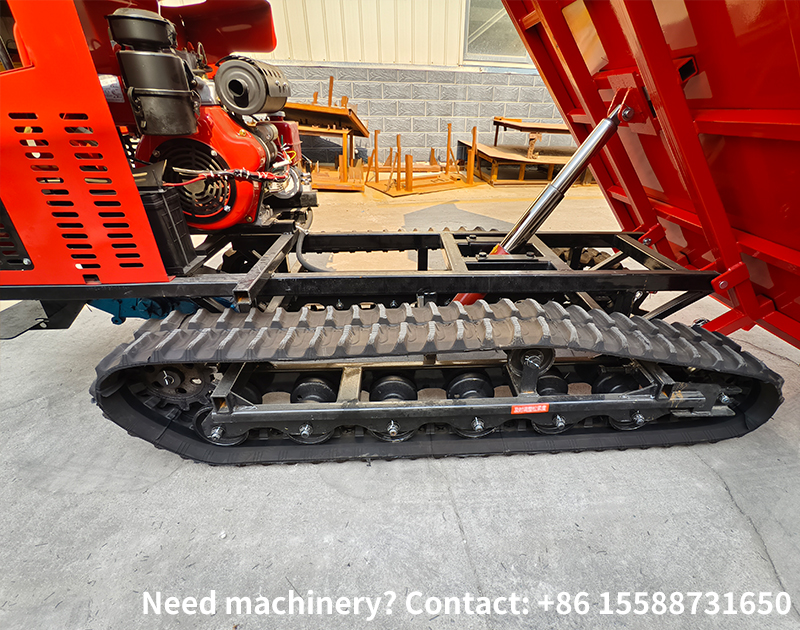
Subtypes and characteristics of steel tracks
Standard steel tracks: The track shoes are flat or with simple patterns, suitable for conventional hard ground.
Steel tracks with patterns/anti-skid teeth: The surface of track shoes is equipped with raised patterns or anti-skid teeth, which improve grip on muddy and steep terrain.
Wear-resistant alloy steel tracks: The track shoes are made of wear-resistant alloy materials such as high manganese steel, which greatly improves wear resistance and impact resistance.
Limitations: Heavy weight and high noise, easy to damage hardened pavement during driving; great wear to transmission components such as track wheels and sprockets, resulting in relatively high maintenance costs.
Composite tracks combine the advantages of rubber and steel, and the common form is steel skeleton + rubber-coated track shoes, which balance wear resistance and pavement friendliness.
Mixed road condition operations: For example, scenarios that require driving on gravel roads in mines and temporarily passing through hardened pavement in factories, which can not only meet wear resistance requirements but also reduce pavement damage.
Medium-sized heavy-load scenarios: 5–10 ton tracked transporters, suitable for short-distance heavy-load working conditions with certain pavement protection requirements.
Limitations: Higher cost than pure rubber tracks and ordinary steel tracks; not applicable to ultra-heavy-duty and ultra-high-wear extreme working conditions.