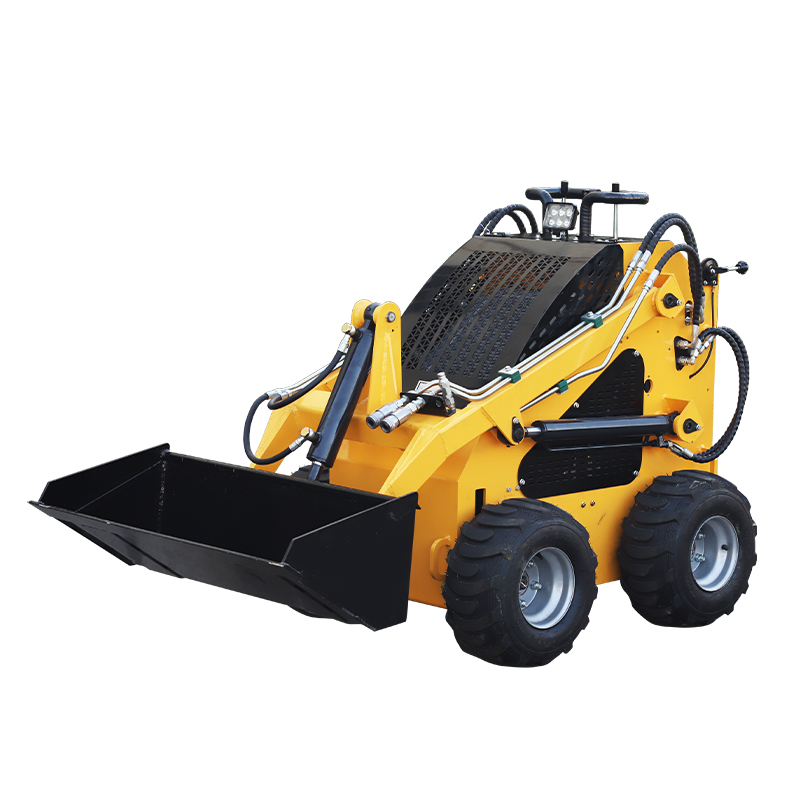
The rated load capacity of a loader is a core technical parameter for measuring its operational capability. It directly determines the equipment's operational efficiency, safety, and service life, and is an indicator that operators and equipment managers must prioritize when selecting models and planning operations.
The rated load capacity of a loader refers to the maximum mass of materials that its front bucket or supporting attachments can safely and stably carry under the equipment's design standards and specified operating conditions (usually flat and solid ground, with the bucket horizontally shoveling bulk materials such as dry earth, sand, and gravel). The unit is typically "ton (t)" or "kilogram (kg)".
This parameter is determined by the manufacturer through comprehensive design based on the equipment's core structural strength (such as the material and design load of the frame, boom, and rocker arm), hydraulic system load-bearing capacity, travel system stability (wheelbase and track width matching), braking performance, and other factors. It is clearly marked in the equipment's factory manual and on the machine's nameplate (e.g., "Rated Load Capacity: 5t").
Two key prerequisites need to be noted:
Working Condition Limitation: The rated load capacity only applies to the "standard operating environment". If the ground is soft (prone to vehicle sinking), the slope exceeds the equipment's specified value (usually ≤15°), or the materials being shoveled are highly viscous and clumpy (such as wet mud or frozen soil), the actual safe load-bearing capacity must be lower than the rated value.
Attachment Matching: If the loader is equipped with alternative attachments (such as log grapples or side-dump buckets), the rated load capacity must be reconfirmed based on the load limit of the attachments. The rated value of the original bucket cannot be directly used.
The rated load capacity is not only an indicator of "how much can be loaded" but also directly related to operational safety, efficiency, and equipment wear. The specific impacts can be divided into the following 4 dimensions:
Overloading is a core safety hazard in loader operations, and the rated load capacity serves as the "red line" to prevent overloading. The specific impacts include:
Structural Damage: Long-term overloading can cause cracks in the welds of the boom and rocker arm, deformation of the bucket, and even frame distortion. Damage to these core structures not only incurs high maintenance costs but may also lead to sudden failure during operations (e.g., boom fracture), triggering safety accidents such as equipment overturning and material falling.
Reduced Stability: The center of gravity of a loader is designed to match its rated load capacity. Overloading causes the equipment's center of gravity to shift forward (during shoveling) or deviate (during turning). Especially when operating on slopes or uneven ground, the risk of rollover is extremely high.
Brake and Power Failure: Overloading increases the load on the travel system, resulting in longer braking distances (or even brake failure). At the same time, it forces the engine to operate under high load for a long time, which may lead to insufficient power, stalling, or accelerated wear of the engine and hydraulic pump.
The rated load capacity is a key basis for optimizing operational efficiency, and it is not the case that "the more loaded, the higher the efficiency":
Matching with Transfer Equipment: When a loader feeds materials to trucks or muck trucks, its rated load capacity needs to match the rated volume of the transfer equipment (e.g., a 5t loader corresponds to a 20-25m³ truck). This avoids "small loaders feeding large trucks" (frequent back-and-forth trips, low efficiency) or "large loaders feeding small trucks" (failure to fill the truck in one trip, wasting equipment capacity).
Controlling Operation Cycle Time: Operating within the rated load capacity allows the loader to maintain an optimal rhythm in the shoveling (moderate resistance when the bucket cuts in), lifting (normal load on the hydraulic system), and unloading (stable movements) links. If overloaded, the lifting speed slows down, and the operational flexibility decreases during turning and reversing. This actually prolongs the single operation cycle time and reduces overall efficiency.
Strictly operating in accordance with the rated load capacity is a core method to extend the service life of a loader:
Protecting Core Components: The hydraulic system (cylinders, hydraulic pumps), transmission system (gearbox, drive axle), and travel system (tires, crawlers) all have design load limits. Overloading causes these components to be in a "super-fatigue" state for a long time, accelerating wear (e.g., abnormal tire blowouts, hydraulic oil seal leaks), and significantly increasing maintenance frequency and costs.
Avoiding Irreversible Failures: Long-term overloading may cause "chain failures". For example, overloading leads to boom deformation → bucket alignment deviation → uneven force during shoveling → further exacerbation of frame damage. Eventually, this may result in premature equipment scrapping (usually, overloaded operations reduce the equipment's service life by 30%-50%).
The rated load capacity is also an important basis for the compliance of equipment operations:
Industry Standard Requirements: Safety regulations in industries such as construction and mining (e.g., Safety Technical Regulations for the Use of Construction Machinery) clearly stipulate that loaders shall not exceed their rated load capacity during operations. Non-compliant operations will be subject to regulatory penalties. If an accident is caused, the operator and manager shall bear corresponding legal responsibilities.
Basis for Insurance and Maintenance: If equipment damage or an accident occurs due to overloading, the insurance company may refuse compensation on the grounds of "not operating in accordance with rated parameters". Equipment manufacturers will also list "overloading" as an exemption clause for maintenance, no longer providing original factory quality assurance services.
The rated load capacity of a loader is not merely a "load upper limit" but a "core benchmark" for the equipment's safety, efficiency, service life, and compliance. In actual operations, operators must strictly refer to the equipment's nameplate and manual, adjust the actual load according to the operating environment (ground conditions, material characteristics), and avoid "overloading in pursuit of short-term efficiency". Only in this way can the operational goal of "balancing safety and efficiency and ensuring long-term stable operation of the equipment" be achieved.



 Chinese