

 Chinese
- HOME >> NEWS >> Industry news
NEWS
Latest Product
Contact Us
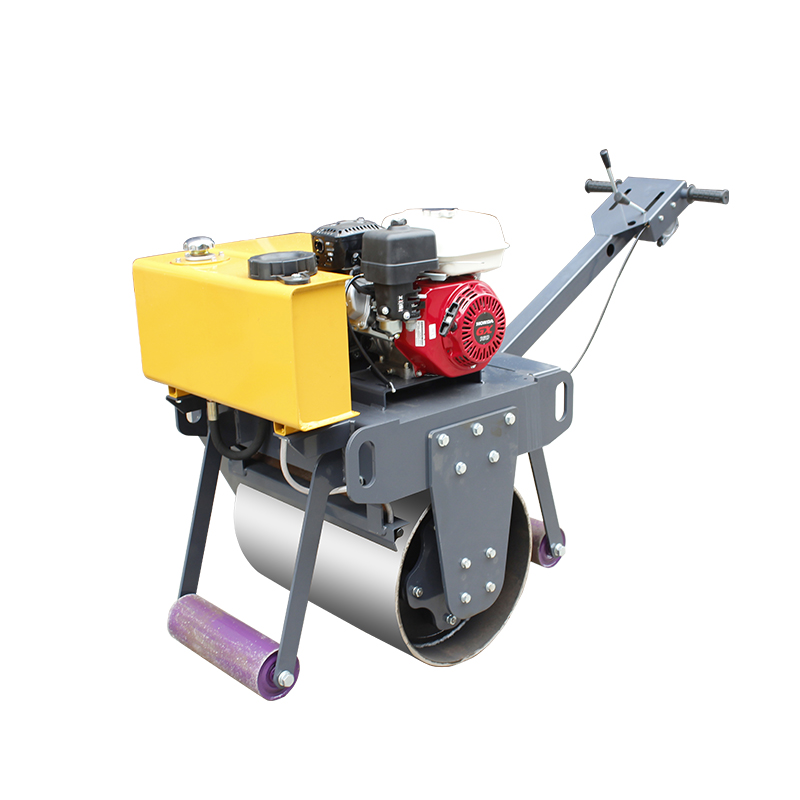
How does the weight of a roller affect the compaction effect?
2025-08-01The weight of a roller is one of the core factors influencing the compaction effect. It directly determines the compaction quality (such as compactness, stability, flatness, etc.) by changing the pressure intensity on the compacted material, the depth of stress transmission, and the material's compactness. The following elaborates on the specific mechanism of how weight affects the compaction effect, the applicable scenarios for different weights, and related factors:
I. Core Mechanism of How Weight Affects Compaction Effect
Relationship between Pressure Intensity and Material Compactness
The compaction of materials by a roller essentially relies on the linear pressure (pressure per unit length, unit: kN/m) generated by its own weight. The greater the weight, the higher the linear pressure, and the tighter the gaps between material particles are squeezed:
Differences in Stress Transmission Depth
The greater the weight, the stronger the ability of compaction stress to transmit to the deep layers of the material:
Enhancement of Material's Deformation Resistance
The shear strength and bearing capacity of compacted materials are positively correlated with their compactness. When the weight is insufficient, the material has low compactness and is prone to settlement under vehicle loads; with appropriate weight, material particles interlock tightly to form a stable structure (for example, the subgrade compaction degree needs to reach 90%-96% or more to meet road bearing requirements).
II. Applicable Scenarios for Rollers of Different Weights (Matching Compaction Effects)
| Weight Range of Rollers | Typical Linear Pressure | Applicable Materials and Working Scenarios | Characteristics of Compaction Effect |
|---|---|---|---|
| Light (<6 tons) | 10-30kN/m | Sidewalks, garden dirt roads, thin layers of sand and gravel | Surface compaction, avoiding material displacement due to over-rolling (e.g., sand being "pushed into waves") |
| Medium (6-15 tons) | 30-80kN/m | Urban road bases (sand, gravel, cement-stabilized soil), middle asphalt layers | Balances surface and 15-30cm deep compaction, achieving a balance between compactness and flatness |
| Heavy (>15 tons) | 80-200kN/m | Expressway subgrades, thick fills (e.g., airport runways), lower asphalt layers | Significant deep compaction effect, ensuring high bearing capacity; needs to be combined with vibration function to improve efficiency |
Note: Vibratory rollers can enhance compaction through the superimposed effect of "weight + vibration" (the alternating force generated by vibration makes material particles easier to move). Therefore, under the same weight, the compaction depth of vibratory rollers is greater than that of static rollers.
III. Negative Impacts of Excessively Light or Heavy Weight
Problems with Insufficient Weight
Problems with Excessive Weight
IV. Synergistic Effect of Weight with Other Factors
The compaction effect is not determined solely by weight but needs to be combined with the following factors:
Summary
The weight of a roller directly affects the compaction effect through linear pressure, stress depth, and material deformation characteristics. The core is to "match the material type and compaction depth requirements": light weight is suitable for surface and fine operations, while heavy weight is suitable for deep and high-intensity compaction. However, it is necessary to avoid insufficient compaction due to being too light or material damage due to being too heavy. In actual construction, weight parameters should be set comprehensively considering material properties, layer thickness, and equipment functions (such as vibration and oscillation) to achieve a balance between "efficient compaction" and "reliable quality".