
 Chinese
- HOME >> NEWS >> Company news
NEWS
Latest Product
Contact Us
How to Select the Suitable Roller According to Soil Type?
2026-03-14How to Select the Suitable Roller According to Soil Type
I. Cohesive Soil (Clay, Silty Clay)
Characteristics:Easy to clump, low permeability, difficult to compact; hard to achieve dense compaction when too dry or too wet.
Equipment selection:
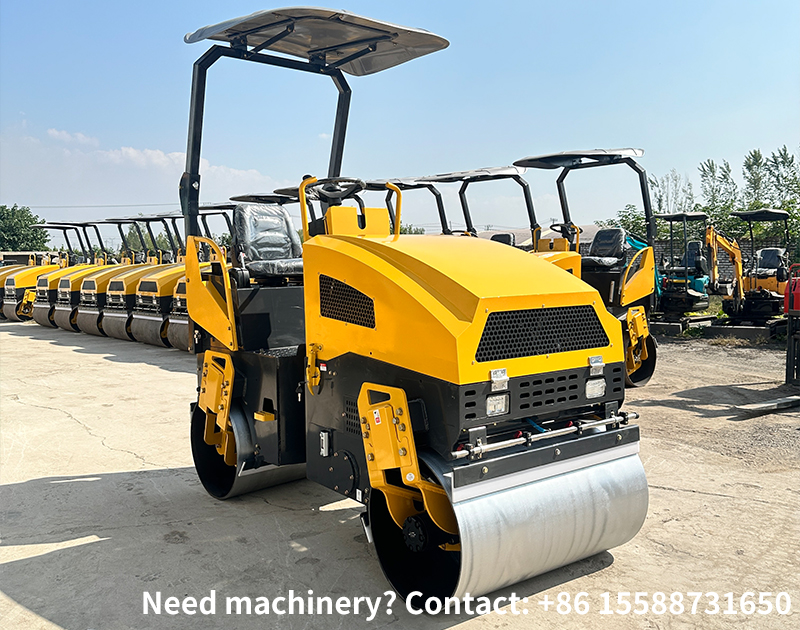
Heavy-duty vibratory roller (single-drum):Strong vibration impact can break up soil structure, rearrange particles and improve density.
Sheep-foot roller / Pad-foot roller:The lugs penetrate into the soil layer, providing kneading and squeezing effect to avoid “false compaction (hard surface, loose interior)”.
Conclusion:For cohesive soil, priority is given to vibratory roller + pad-foot / sheep-foot roller.
II. Sandy Soil, Sand, Gravelly Soil
Characteristics:Loose particles, good permeability, easy to compact, but prone to looseness and loss.
Equipment selection:
Vibratory roller (single-drum):High-frequency vibration makes sand particles fully dense and closely arranged, with deep compaction and high efficiency.
Static smooth-wheel roller:Used for surface stabilization and smoothing to prevent surface looseness.
Conclusion:Vibratory roller is the first choice for sandy soil.
III. Gravelly Soil, Cobble, Soil-Rock Mixture
Characteristics:Large particles, big voids, requiring strong impact force.
Equipment selection:
Large-tonnage, large-amplitude vibratory roller:Strong vibration stabilizes coarse aggregates by interlocking, with deep compaction.
Heavy-duty smooth-wheel roller
Conclusion:For coarse-grained materials, use large-tonnage, large-amplitude vibratory roller.
IV. Backfill Soil, Trench Soil, Narrow Areas
Characteristics:Thin soil layers, limited space, inaccessible to large equipment.
Equipment selection:
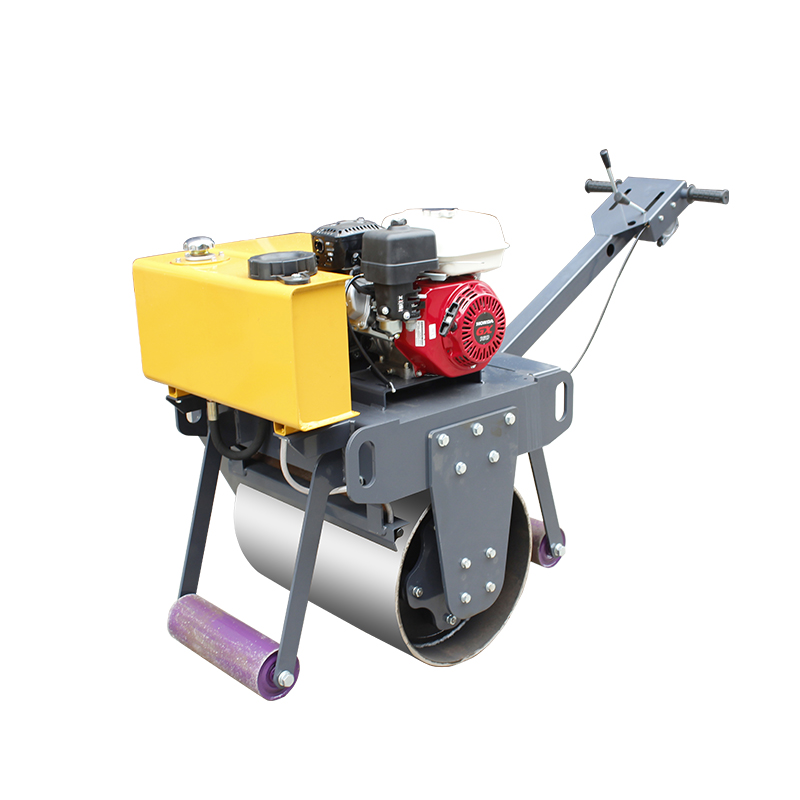
Walk-behind light roller
Small vibratory compactor / small roller
Conclusion:Use light walk-behind roller for trenches and narrow spaces.
V. Summary: One-Sentence Template
Cohesive soil:Suitable for vibratory roller, sheep-foot roller or pad-foot roller, using kneading and vibration to improve density.
Sandy soil, gravelly soil:Suitable for vibratory roller, which densifies particles by vibration.
Gravel, soil-rock mixture:Suitable for large-tonnage, large-amplitude vibratory roller.
Trenches, narrow areas:Suitable for light walk-behind roller.