

 Chinese
- HOME >> NEWS >> Company news
NEWS
Latest Product
Contact Us
Is There a Limit to the Slope-Climbing Capacity of Remote-Controlled Lawn Mowers, and Can They Be Used on Sloped Lawns?
2025-10-31The slope-climbing capacity of remote-controlled lawn mowers is limited, but they can usually be used on sloped lawns. The specific details are as follows:
Limits on Slope-Climbing Capacity
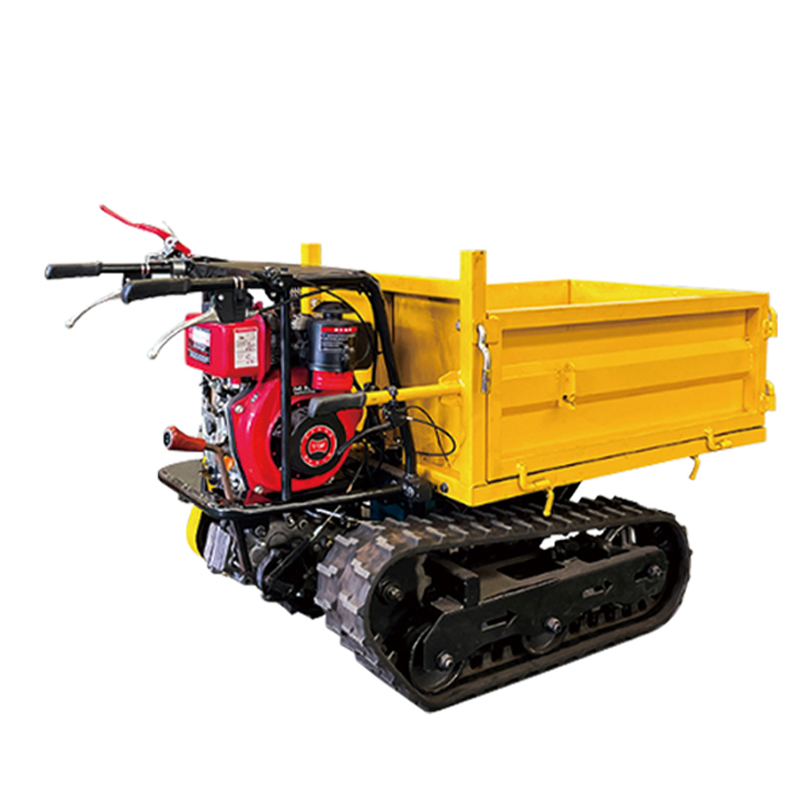
The slope-climbing capacity of remote-controlled lawn mowers varies depending on the model. Generally speaking, tracked remote-controlled lawn mowers have relatively strong slope-climbing capabilities. Some models can achieve a maximum longitudinal climbing angle of 36° and a maximum diagonal climbing angle of 41°, such as the remote-controlled tracked lawn mower developed by the Nanjing Institute of Agricultural Mechanization, Ministry of Agriculture and Rural Affairs. There are also some tracked lawn mowers with a climbing angle of ≤ 40°, like the Jifeng remote-controlled tracked self-propelled lawn mower.
In contrast, wheeled remote-controlled lawn mowers have relatively weaker slope-climbing capabilities. They can usually work normally on some relatively gentle slopes, but on slopes with larger gradients, problems such as slipping and insufficient power may occur. However, there are also some specially designed wheeled lawn mowers that have a certain slope-climbing capacity, but they still lag behind tracked ones. In addition, some high-end remote-controlled lawn mowers have even stronger slope-climbing capabilities. For example, the Grator Lowrider electric remote-controlled lawn mower, with its four-wheel drive, can handle slopes of up to 70°.
Applicability to Sloped Lawns
As long as the gradient of the slope is within the slope-climbing capacity range of the remote-controlled lawn mower, the mower can be used for trimming sloped lawns. For instance, remote-controlled lawn mowers can be seen in orchards and tea gardens in some hilly areas, as well as in some sloped green spaces in cities. However, when using a remote-controlled lawn mower to trim sloped lawns, the following points should be noted: