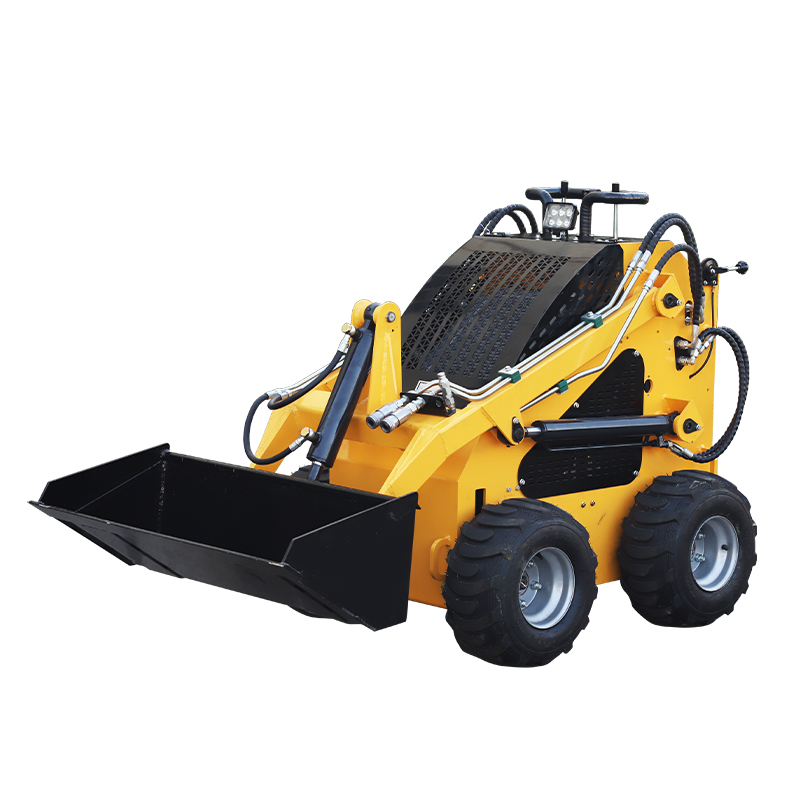
The core material requirements for a loader bucket are "wear resistance, impact resistance, and high strength". It needs to withstand both the frictional wear and impact load of materials simultaneously. Different parts will use targeted materials based on differences in force bearing, and a single type of steel cannot be used for all parts.
The key to extending the service life of a bucket lies in "selecting the right material + proper use + regular maintenance". Only the combination of these three can minimize wear and damage to the greatest extent and reduce replacement costs.
During operation, different parts of the bucket bear different forces and suffer varying degrees of wear. Therefore, material selection is designed by region, mainly dividing the bucket into 3 key parts:
The bucket body is the "framework" of the bucket. It needs to support the weight of all materials while not being too heavy, which would increase the equipment's fuel consumption. The material requirements are mainly "high strength + certain toughness":
Common Materials: Q355 (low-alloy high-strength steel) or NM360 (wear-resistant steel). The tensile strength of Q355 steel is over 355MPa, which can withstand heavy loads without deformation. If the materials in operation have strong abrasiveness (such as gravel and ore), NM360 wear-resistant steel is used. Its surface hardness is higher (Brinell hardness over 360HB), and its wear resistance is 2-3 times higher than that of ordinary steel.
Thickness Requirements: Adjusted according to the bucket capacity and operation intensity. The thickness of the bucket body of small buckets (below 1m³) is mostly 6-10mm, while that of large buckets (above 5m³) will be increased to 12-20mm. Key stress areas (such as the middle of the bucket bottom) will be additionally thickened.
The bucket teeth and bucket lip are the parts that directly insert into and scrape materials. They wear the fastest and bear the greatest impact. The material must be "hard and tough", requiring both wear resistance and resistance to easy breakage:
Bucket Tooth Material: High-manganese steel (ZGMn13) or alloy wear-resistant steel (such as 40CrNiMo). High-manganese steel undergoes "work hardening" when impacted, and its surface hardness instantly increases from 200HB to over 500HB, with extremely strong wear resistance, making it suitable for excavating hard rock and frozen soil. Alloy wear-resistant steel, by adding elements such as chromium, nickel, and molybdenum, improves toughness while ensuring hardness, preventing the bucket teeth from breaking under heavy loads.
Bucket Lip Material: NM450-NM500 high-wear-resistant steel is usually used, and its thickness is 50%-100% thicker than the bucket body (for example, if the bucket body is 10mm, the bucket lip is 15-20mm). Some models also weld "wear-resistant welding rods" or "alloy blocks" on the edge of the bucket lip to further extend the wear life.
Connecting parts (such as the connecting lugs between the bucket body and the boom, and pin bosses) mainly bear repeated bending and friction and are prone to cracking due to "fatigue stress". The material requirements are mainly "fatigue resistance + wear resistance":
Common Materials: Grade 45 steel (high-quality carbon structural steel) or 20CrMnTi (alloy structural steel). After quenching and tempering (quenching + high-temperature tempering), Grade 45 steel has a hardness of HRC25-30, with a balance of toughness and strength, suitable for bearing repeated loads. 20CrMnTi, through carburizing and quenching, has a surface hardness of HRC58-62, with better wear resistance and fatigue resistance, and is mostly used in key connecting parts of large loaders.

Selecting the right material is the foundation, while daily use and maintenance are the keys to determining the service life. Specific operations can be carried out from 4 aspects:
Many bucket damages are not caused by normal wear but by improper operation. Attention should be paid to the following 3 points:
Prohibit "forced digging and prying": When encountering hard materials (such as large rocks and concrete blocks), do not forcibly hit or pry with bucket teeth. Instead, try to break them first (such as using a breaker), otherwise, it will cause the bucket teeth to break and the bucket lip to deform.
Control the bucket filling amount: Do not exceed the rated load capacity. Overfilling will cause the bucket body to bear overload pressure for a long time, leading to the depression of the bucket bottom and the cracking of welds. At the same time, avoid "unbalanced loading" (materials loaded only on one side) to prevent the bucket body from deforming due to uneven force.
Reduce "scraping the ground": During operation, try to keep the bucket slightly off the ground to avoid the bucket bottom scraping the ground for a long time (especially on gravel and crushed stone ground) and reduce the wear of the bucket bottom. When cleaning the ground, do not let the bucket lip directly rub against the ground; you can slightly lift the bucket teeth and gently scrape with the edge of the bucket bottom.
If minor wear is not handled in time, it will quickly develop into a major failure. It is recommended to spend 5 minutes checking before and after each operation:
Check the bucket teeth: If the bucket teeth are worn to 1/3 of their original height (or cracks appear), they must be replaced immediately. Otherwise, the bucket lip will directly contact the materials, and the wear rate will accelerate by 5-10 times. At the same time, check whether the bucket tooth pins are loose; looseness will cause the bucket teeth to shake, increasing wear and abnormal noise.
Check the bucket body and bucket lip: If small cracks appear on the bucket body (especially at the welds), they can be repaired by welding with wear-resistant electrodes in time. If the bucket lip is severely worn (thickness reduced by 1/2), wear-resistant blocks can be welded or the bucket lip plate can be replaced to avoid the bucket body being scrapped due to the expansion of cracks.
Check the connecting parts: Regularly add grease to the trunnions and pin bosses (it is recommended to add grease every 20 hours) to reduce dry friction between metals. If the pin shaft is found to be excessively worn (gap exceeding 3mm), replace it in time to prevent the bucket body from deforming due to the looseness of the connecting parts.
Different materials in operation have great differences in abrasiveness. "Additional protection" can be used to further extend the service life:
For high-wear materials (gravel, ore): Weld "wear-resistant liners" (such as NM360 liners) on the inner walls of the bucket bottom and bucket sides, or spray "wear-resistant coatings" (such as ceramic coatings), which can increase the service life of the bucket body by 1-2 times.
For viscous materials (wet soil, sludge): Apply "anti-adhesive coatings" (such as polytetrafluoroethylene coatings) on the inner wall of the bucket to reduce material adhesion and avoid the need for manual cleaning after each unloading (knocking during cleaning will also damage the bucket body). At the same time, after each operation, rinse the residual materials in the bucket with water in time to prevent the materials from hardening and increasing wear during the next operation.
If the loader is not used for a long time (more than 1 month), incorrect storage methods will cause the bucket to rust and the material performance to decline:
Thoroughly clean before storage: Clean all residual materials and soil in the bucket, especially the gaps between the bucket teeth and the bucket lip, to prevent rust caused by moisture in the materials.
Do a good job of rust prevention: Apply anti-rust oil (or diesel oil) on the metal surfaces of the bucket body and bucket teeth, focusing on protecting severely worn parts. If stored outdoors, cover the bucket with a rainproof cloth to avoid coating aging caused by rain washing and sun exposure.
Maintain the bucket state: When storing, slightly lift the bucket (10-20cm off the ground) to avoid the bucket bottom being in contact with the humid ground environment for a long time. At the same time, turn the bucket teeth upward to reduce the accumulation of dust and debris.


 Chinese