

 Chinese
- HOME >> NEWS >> Industry news
NEWS
Latest Product
Contact Us
What is the general compaction thickness of a road roller?
2025-06-26The compaction thickness of a roller is typically determined based on a comprehensive evaluation of soil type, material properties, roller model, and construction requirements. Below is a general reference range:
Standard Compaction Thickness
Loose materials (e.g., sandy soil, gravel): Single-layer compaction thickness is usually 20–30 cm.
Cohesive soil (e.g., clay, silt): Single-layer thickness is relatively thin, typically 15–25 cm, as clay requires higher compaction energy.
Mixed fill materials: Approximately 20–40 cm, with specifics determined through test sections.
Influence of Roller Type
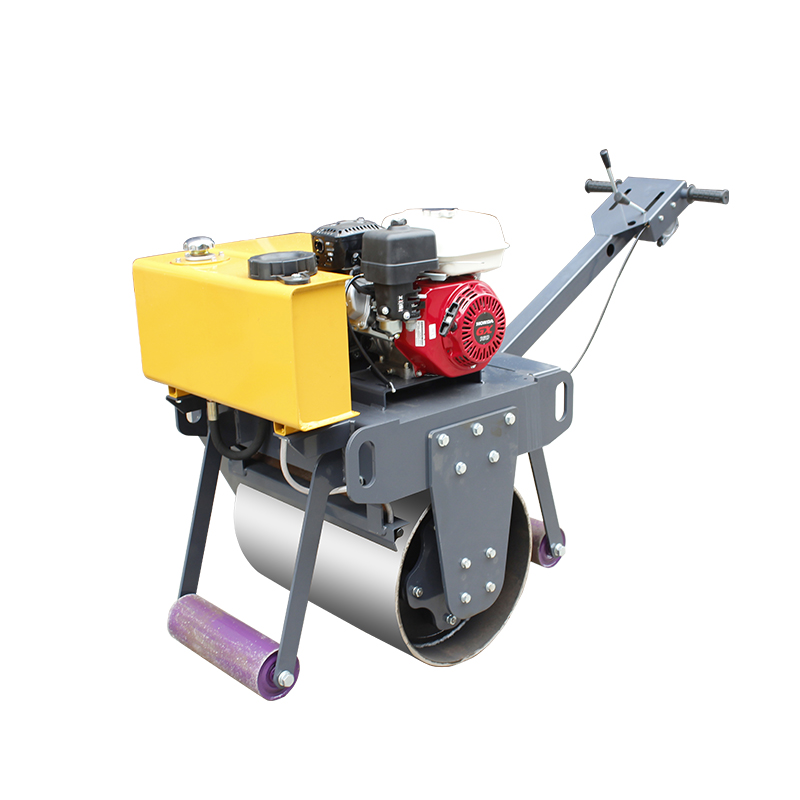
Static rollers: Suitable for thin-layer compaction (15–25 cm), relying on self-weight for compaction.
Vibratory rollers: Can handle thicker layers (25–50 cm), as vibration waves enhance deep-layer density.
Impact rollers: Maximum thickness can reach 50–100 cm, ideal for large-scale fill projects.
Key Control Factors
Material moisture content: Should be close to the optimal water content; otherwise, compaction effectiveness may be compromised.
Number of passes: Typically 4–6 passes; excessive rolling may cause material breakdown.
Layered construction: Each compacted layer must undergo density testing (e.g., ≥95% of standard compaction) before the next layer is laid.
Special Conditions
Asphalt pavement: Paving thickness is usually 5–10 cm (hot-mix asphalt), with a post-compaction reduction of about 20%.
High-fill subgrade: May involve layers exceeding 50 cm, requiring heavy-duty equipment.
Regulatory Standards
Rock-fill subgrade: Each layer should not exceed 40 cm.
Soil subgrade: Each layer should not exceed 30 cm.
China’s Technical Specifications for Highway Subgrade Construction (JTG/T 3610-2019) recommends:
In practice, optimal parameters should be determined through test sections to ensure compaction density (e.g., ≥96% for expressway subgrades) and uniformity meet design requirements. Excessive thickness may result in loose lower layers, while insufficient thickness reduces efficiency.