The common types of working devices for loaders are mainly designed around different operational needs, and they can be essentially divided into two major categories: standard operating devices and special operating devices.
These devices are the basic configuration of loaders and are mainly used for regular shoveling and handling operations.
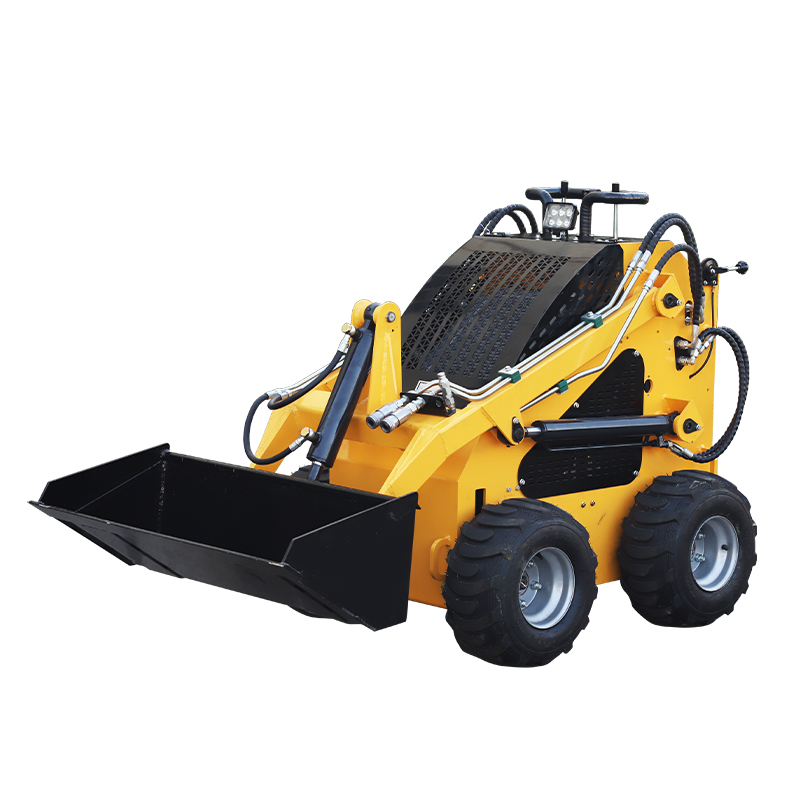
Standard Bucket: The most versatile working device, which is divided into straight-wall buckets and curved-wall buckets. Straight-wall buckets are suitable for shoveling block materials such as hard soil and ores, while curved-wall buckets are more conducive to shoveling loose materials like sand, gravel, and coal, as they can reduce material spillage.
Enlarged Bucket: It has an increased capacity based on the standard bucket and is suitable for scenarios with open spaces, loose materials, and high requirements for operational efficiency, such as grain transshipment and bulk building material stacking. However, it must match the rated load capacity of the loader to avoid overloading.
These devices are designed for specific operational scenarios and need to be separately selected and configured according to requirements to expand the functions of the loader.
Grab Bucket: It is divided into mechanical grab buckets and hydraulic grab buckets, mainly used for grabbing bulk or bundled materials. Mechanical grab buckets are driven by the loader's own movements, while hydraulic grab buckets are controlled by an independent hydraulic system, providing stronger grabbing force. They are suitable for loading and unloading materials such as wood, steel, and waste materials.
Bulldozer Blade: Installed at the lower front of the loader, it can realize the functions of pushing soil and leveling the site. Some bulldozer blades have an angle adjustment function, allowing lateral soil pushing, and are often used in preliminary foundation operations such as site cleaning at construction sites and roadbed leveling.
Ripper: Mostly installed at the rear of the loader, it is divided into single-tooth and multi-tooth structures. Single-tooth rippers are suitable for breaking hard soil layers and weathered rocks, while multi-tooth rippers are used for loosening large areas of soil or crushing small pieces of materials. They are commonly used in mines and farmland transformation operations.
Fork Attachment: By replacing the bucket with forks, it can be used to transport goods loaded on pallets, such as pallets, containers, and bagged materials. It is widely used in warehouses, logistics parks, building material markets, etc., and combines the flexibility of loaders with the handling function of forklifts.
Breaker Hammer: Driven by a hydraulic system, it replaces the bucket with a breaker hammer and can break concrete blocks, rocks, components of old buildings, etc. It is suitable for operation scenarios such as demolition sites, road maintenance, and secondary crushing in mines.



 Chinese