

 Chinese
- HOME >> NEWS >> Industry news
NEWS
Latest Product
Contact Us
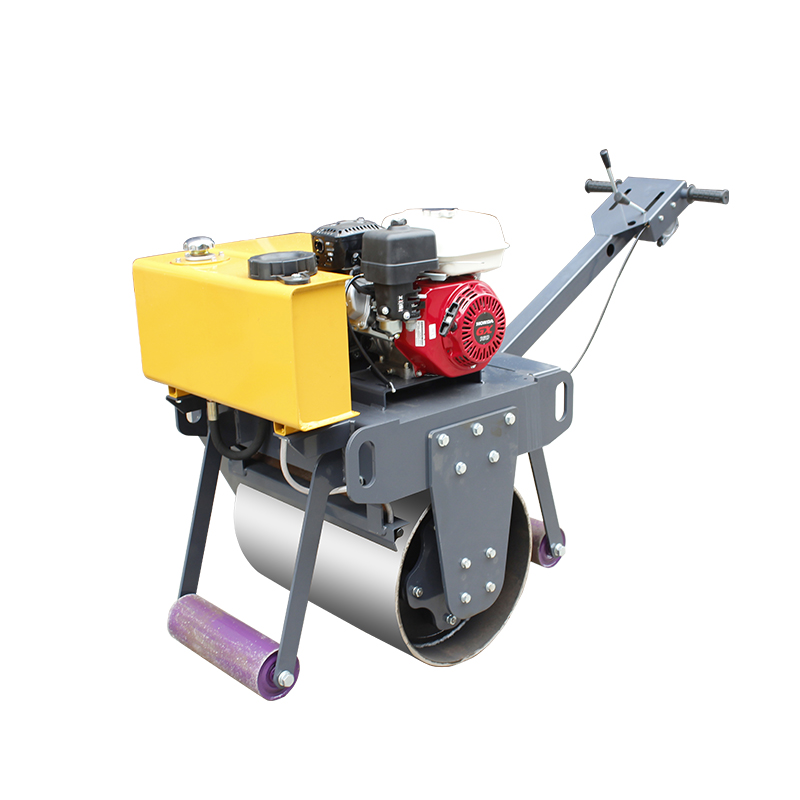
Compaction Capacity and Engineering Adaptability of Walk-Behind Rollers
2025-04-30As compact compaction equipment, walk-behind rollers play a vital role in municipal engineering, road repairs, and confined space operations due to their flexibility and portability. However, their compaction capacity differs significantly from large rollers, necessitating careful selection based on project requirements. This analysis examines their compaction performance and engineering adaptability.
I. Compaction Capacity Analysis
1. Key Influencing Factors
The compaction effectiveness of walk-behind rollers primarily depends on:
Weight & Excitation Force:
Typical weight: 0.5–2 tons; excitation force: 10–30 kN (shallow compaction depth: 10–30 cm).
Compared to large single-drum rollers (200+ kN), walk-behind models are better suited for thin-layer compaction.
Vibration Frequency & Amplitude:
High frequency (50–70 Hz): Ideal for asphalt or thin layers.
Low frequency (25–40 Hz): Suitable for subgrade compaction.
Adjustable amplitude (e.g., 0.3–0.8 mm) adapts to diverse materials.
Speed & Pass Count:
Recommended speed: 2–4 km/h; passes: 3–6 (material-dependent).
2. Compaction Performance by Material Type
| Material | Suitability | Compaction Effect | Recommended Parameters |
|---|---|---|---|
| Asphalt Mix | ★★★★☆ | High surface density, limited depth | High freq. (50+ Hz), low speed (2–3 km/h), 3–5 passes |
| Gravel/Sand Base | ★★★☆☆ | Thin-layer only, extra passes needed | Low freq. (30 Hz), 4–6 passes |
| Clay/Stabilized Soil | ★★☆☆☆ | Prone to sticking; water or rubber wheels advised | Static mode + rubber wheel assist |
| Trench Backfill | ★★★★☆ | High flexibility for spot compaction | Vibration + static combo |
Limitations:
Unsuitable for thick-layer compaction (e.g., highways, runways).
Poor performance on cohesive/high-moisture soils (requires additives like sand).
II. Engineering Adaptability
1. Ideal Applications
Municipal Work: Sidewalks, curb edges, manhole surrounds.
Road Repairs: Patch compaction after pothole fixes.
Landscaping: Lawn or pedestrian path base compaction.
Utility Trenches: Accesses spaces inaccessible to large machinery.
2. Selection & Optimization Tips
Model Choice:
Vibratory: Best for granular materials (gravel, asphalt).
Static: Sensitive areas (e.g., near structures).
Pneumatic: Minimizes asphalt texture damage.
Parameter Tuning:
Add ballast (e.g., water tank) for loose materials.
Select models with climb assist (≥20° slopes).
Process Integration:
Pair with plate compactors for edge compaction.
Use as auxiliary equipment in large projects for edges/blind spots.
Conclusion
Walk-behind rollers excel in small-scale, thin-layer compaction but have limited capacity. Parameters must be adjusted for material properties, and workflows should be optimized. Future electrification and smart technologies will further enhance their adaptability.
Usage Guidelines:
Preferred: Confined spaces, spot repairs, low-intensity compaction.
Avoid: Thick subgrades, high-grade pavement final compaction, cohesive soils.