
 Chinese
- HOME >> NEWS >> Company news
NEWS
Latest Product
Contact Us
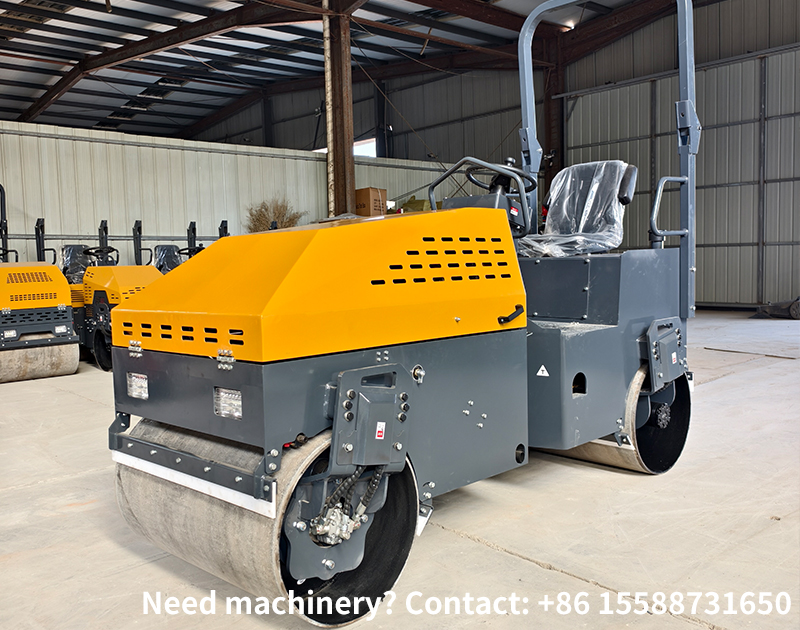
Difference Between Vibratory Compaction and Static Compaction for Road Rollers
2026-02-22I. Core Difference (One Sentence)
Static compaction: Relies only on its own weight to press down, like flattening with a stone.
Vibratory compaction: Uses weight + high-frequency vibration together, like pressing while shaking to compact the material tightly.
II. Detailed Comparison
1. Working Principle
Static compactionRelies on the vertical pressure generated by the roller’s own weight to compact and level the material.
Vibratory compactionThe steel drum contains an eccentric block that rotates at high speed to produce high-frequency vibration. This rearranges aggregates, eliminates voids, and achieves much higher density than static compaction.
2. Compaction Effect
Static compaction
Medium density
Mainly used to remove wheel marks and improve smoothness
Vibratory compaction
Much higher density
Can reach the required compaction standard; the main method for subgrade, cement-stabilized layers, and asphalt
3. Applicable Scenarios (Most Important)
👉 Static compaction is used for:
Initial and final rolling of asphalt pavements
Finishing and leveling when compaction is nearly complete
Thin layers and structurally fragile sections to prevent damage from vibration
👉 Vibratory compaction is used for:
Subgrade soil and sand-gravel cushions (must be vibrated to achieve full compaction)
Cement-stabilized crushed stone base
Intermediate rolling of asphalt pavements (main compaction stage)
III. Site Memory Formula (Easy to Remember)
Static compaction: levels, finishes, and avoids vibration damage.Vibratory compaction: fully compacts, densifies, and does the main work.
Three steps for asphalt:static initial rolling → vibratory intermediate rolling → static final rolling.
Simple summary:Static compaction handles smoothness;vibratory compaction handles density.