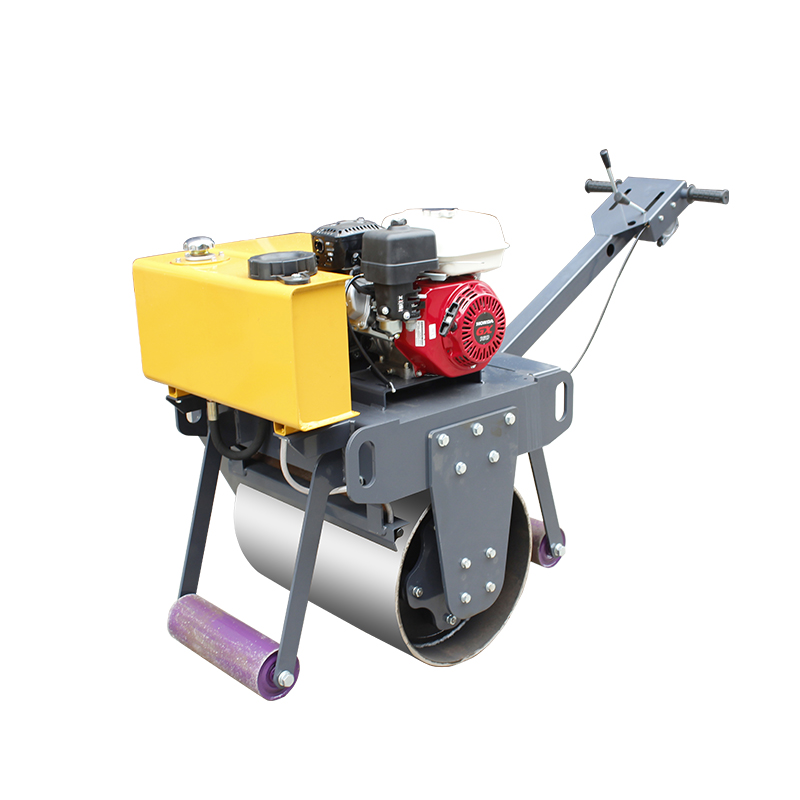
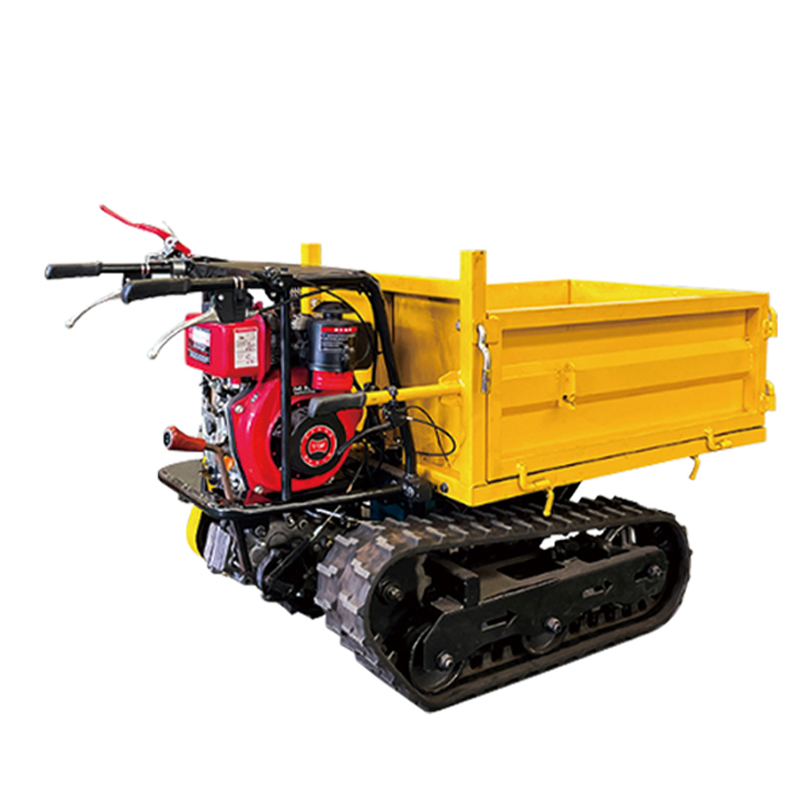
The traction method of a road crack sealing machine directly determines the equipment’s mobility characteristics, applicable operation scenarios, and operational convenience, thereby exerting a key influence on construction flexibility. Equipment with different traction methods varies significantly in terms of operation radius, site adaptability, and relocation efficiency. A comprehensive analysis of the specific impacts must be conducted in combination with the traction type and construction requirements. The following are the mainstream traction methods and their effects on construction flexibility:
The traction methods of road crack sealing machines are mainly divided into three categories: pulled type, self-propelled type (including hand-held self-propelled and driving self-propelled), and towed type. Differences in their structural design and movement principles directly lead to variations in construction flexibility:
Structural Features: The equipment itself has no power unit and relies on an external power source (such as a tractor or pickup truck) for traction and movement. Core components like the material tank and heating system are integrated on a traction frame.
Impact on Construction Flexibility:
Advantageous Scenarios: Suitable for long-distance, large-area construction on trunk highways. The external traction vehicle has strong battery life and can be matched with a large-capacity material tank (usually over 1000L), reducing the frequency of refueling midway and improving continuous operation efficiency. During relocation, it can be directly pulled for movement without additional transportation equipment (such as flatbed trucks), making it suitable for long-distance transfer across road sections.
Limiting Scenarios: Poor flexibility, especially unsuitable for construction on narrow road sections (such as rural lanes and community roads), road sections with dense curves, or urban blocks. The traction vehicle and the crack sealing machine form a long overall length, resulting in a large turning radius and high difficulty in U-turning and avoiding obstacles. In complex terrains (such as road sections with large slopes), the traction stability is greatly affected by the power and maneuverability of the traction vehicle, and movement jams are likely to occur.
Operational Flexibility: Requires at least two operators (one to drive the traction vehicle and one to operate the crack sealing machine). The coordination difficulty is high, strict requirements are imposed on construction organization, and it is difficult to adjust the operation route quickly.
The self-propelled type is currently the most widely used type, which can be further subdivided according to the operation method, and its impacts on construction flexibility vary significantly:
Structural Features: The equipment is equipped with a small power unit (such as a gasoline engine or diesel engine), has a compact size (material tank capacity is usually 100-300L), and adopts hand-held control, following an operation logic similar to that of small agricultural machinery.
Impact on Construction Flexibility:
Advantageous Scenarios: Perfectly suitable for small-scale construction in complex terrains, such as rural roads, community roads, parking lots, and campus roads. The equipment has a small turning radius (some can achieve in-place steering) and can easily avoid obstacles like manhole covers and curbstones. No additional traction vehicle is required for operation; a single person can complete both driving and crack sealing operations. It can quickly adjust the operation direction and speed, making it suitable for precise repair of local cracks.
Limiting Scenarios: Limited battery life and material tank capacity, making it unsuitable for long-distance, large-area continuous construction. The frequency of refueling materials and replenishing fuel midway is relatively high. Restricted by power, its stability is insufficient when driving on road sections with large slopes, and the operation efficiency is low.
Structural Features: Integrates a cab, power system, material tank, and operation device into one body, similar to a small engineering vehicle. It has a medium material tank capacity (300-800L) and possesses independent movement and operation capabilities.
Impact on Construction Flexibility:
Advantageous Scenarios: Balances operation efficiency and flexibility, making it suitable for construction on urban main roads, secondary trunk roads, and medium-scale highways. The cab design improves operational comfort; operators can accurately control the driving speed and crack sealing flow in the cab. Equipped with guide wheels or a steering system, it has a moderate turning radius and can adapt to the curve and lane change requirements of most road sections. The independent power system enables flexible relocation, allowing it to drive independently between construction road sections without relying on external traction.
Limiting Scenarios: Larger in size than the hand-held type, so its traffic capacity is limited on narrow road sections (such as rural lanes less than 3 meters wide) or areas with dense obstacles (such as roads in old urban areas). The equipment purchase cost is relatively high, resulting in insufficient cost-effectiveness for small construction teams.
Structural Features: Adopts a trailer-type design and needs to be towed and transported by a matching tractor (such as a heavy-duty truck). It is usually equipped with an extra-large capacity material tank (over 1000L) and a complete heating and stirring system, mostly customized for large-scale construction projects.
Impact on Construction Flexibility:
Advantageous Scenarios: Suitable for large-scale continuous construction on expressways and high-grade highways. The extra-large material tank and fuel tank can meet the needs of long-term operations and reduce the frequency of supply. Some equipment can integrate multiple crack sealing heads to improve operation efficiency.
Limiting Scenarios: The worst flexibility, with strict requirements on the width, slope, and turning radius of the construction road section. It cannot enter small road sections or complex terrains. During relocation, it is restricted by traffic regulations (requiring the handling of towing transportation procedures), resulting in low long-distance relocation efficiency and cumbersome short-distance relocation operations. It has high requirements for the professional skills of operators, who need to be familiar with the driving characteristics of towed vehicles to avoid potential safety hazards during operation.
To clearly present the differences between various traction methods, a summary is made from the following key dimensions:
| Traction Method | Applicable Operation Radius | Site Adaptability | Relocation Efficiency | Operation Difficulty | Core Flexibility Advantages |
|---|
| Pulled Type | Long-distance | Poor (hard to adapt to narrow roads/curves) | Medium (self-traction relocation) | Medium-high | High efficiency in large-area continuous operations |
| Hand-Held Self-Propelled | Short-distance | Excellent (adapts to complex terrains) | Medium (short-distance self-relocation) | Low | Precise small-scale operations, single-person control |
| Driving Self-Propelled | Medium to long-distance | Medium (adapts to most road sections) | Excellent (independent flexible relocation) | Medium | Balances efficiency and flexibility |
| Towed Type | Extra-long distance | Extremely poor (only adapts to wide and straight roads) | Low (cumbersome procedures) | High | Extra-large capacity for continuous operations |
The core of construction flexibility lies in "equipment adapting to scenarios". Therefore, the traction method should be selected according to specific construction requirements:
Small-Scale Repair Scenarios (such as community roads, rural roads, and local crack repairs): Prioritize the hand-held self-propelled type. Its compact and flexible features can quickly respond to complex operation needs and reduce operation costs.
Medium-Scale Regular Road Sections (such as urban secondary trunk roads and county-township highways): The driving self-propelled type is the best choice. It can not only meet the continuous operation efficiency but also cope with terrain changes of most road sections, with strong operational convenience.
Large-Scale Long-Distance Road Sections (such as expressways and trunk highways): The pulled type or towed type is more suitable. The large-capacity design can reduce the frequency of supply, improve the overall construction progress, and at the same time, the traction vehicle ensures relocation capabilities.
Complex Terrain/Narrow Road Sections (such as roads in old urban areas and mountain lanes): Resolutely avoid the towed type and large pulled type; prioritize the hand-held self-propelled type to prevent construction delays caused by the excessive size of the equipment.
The traction method of a road crack sealing machine fundamentally affects construction flexibility by determining the equipment’s "mobility, operation capacity, and operational convenience". In essence, the selection of a traction method is a trade-off between "operation efficiency" and "scenario adaptability": small self-propelled types focus on "flexible adaptation", large pulled/towed types prioritize "efficiency", and driving self-propelled types achieve a balance between the two. Construction teams need to select the most suitable traction method based on factors such as road section type, operation scale, and terrain conditions to maximize construction flexibility and overall operation benefits.


 Chinese