

 Chinese
- HOME >> NEWS >> Company news
NEWS
Latest Product
Contact Us
What Are the Main Types of Road Rollers and Their Core Applications?
2026-01-22Road rollers can be classified in various ways. The mainstream classification is based on three dimensions: travel mode, compaction principle, and wheel structure. Different types of road rollers have significant differences in core applications and suitable working conditions, which are detailed as follows:
Classification by Travel Mode
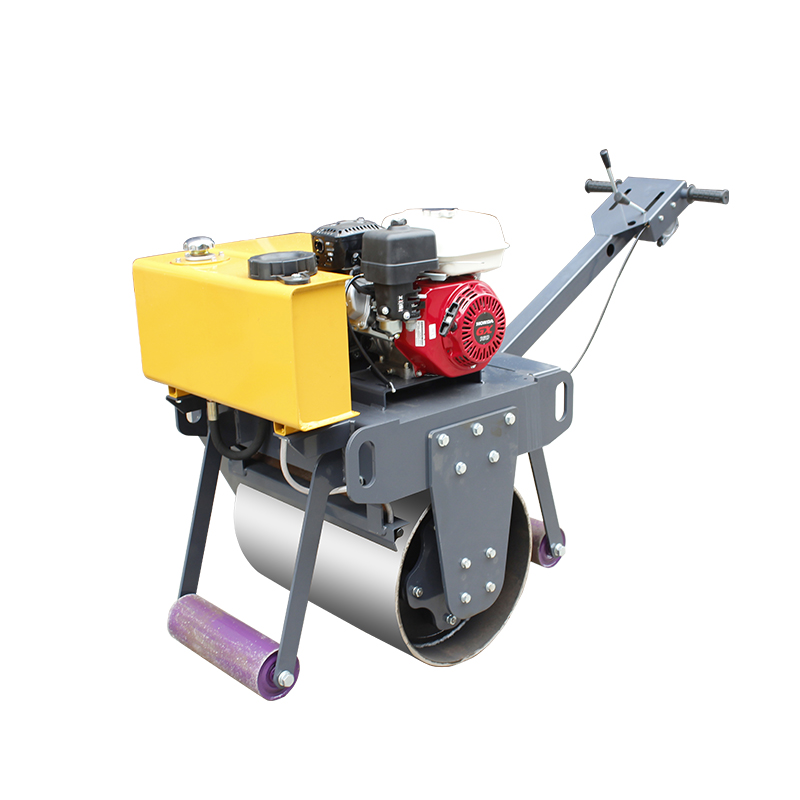
Walk-behind Road Rollers
Core Features: Compact size, light weight (usually 0.3–2 tons), flexible operation, and suitable for single-person operation.Core Applications: Compaction work in narrow areas, such as courtyard pavement repair, subgrade compaction around small flower beds, backfill compaction of pipeline trenches, and indoor floor construction. They are common equipment for small-scale projects and refined operations.
Ride-on Road Rollers
Core Features: Relatively large tonnage (2–30 tons), high operation efficiency, strong compaction intensity, equipped with a driving cabin for good operational comfort.Core Applications: Large-area, high-intensity compaction projects, such as highway subgrade and pavement construction, municipal road reconstruction and expansion, large parking lot foundation compaction, and airport runway construction. They are the main equipment for large-scale construction.
Classification by Compaction Principle
Static Road Rollers
Core Features: Generate compaction force relying on their own gravity, without vibration function, and the compaction process is stable and impact-free.Core Applications: Final compaction of pavements sensitive to the compaction process, such as the final leveling and compaction of asphalt pavements, to avoid the loosening of pavement aggregates caused by vibration. They can also be used for compacting cohesive soil with high moisture content, preventing the occurrence of spring soil phenomenon due to vibration.
Vibratory Road Rollers
Core Features: Transfer kinetic energy to the compacted materials through the high-frequency vibration of the vibrating wheel, rapidly reducing the gaps between particles. Their compaction efficiency and effect are far superior to static road rollers.Core Applications: The vast majority of subgrade and base course compaction works, such as the compaction of gravel subgrades, cement-stabilized soil bases, and graded crushed stone layers. Depending on the tonnage, they can also be used for the initial and intermediate compaction of asphalt pavements, making them the most widely used type of road roller at present.
Impact Road Rollers
Core Features: Compact soil by relying on the falling impact energy of triangular impact wheels, with a compaction depth of 1–5 meters, far exceeding that of vibratory road rollers.Core Applications: Compaction of high-fill subgrades, such as highway subgrade filling, reservoir dam reinforcement, and airport high-fill foundation treatment. They can effectively reduce the post-construction settlement of subgrades and improve the overall stability of the project.
Classification by Wheel Structure
Single-drum Rollers
Core Features: The front wheel is a large-diameter solid steel drum (which can be equipped with vibration function), and the rear wheel is a rubber tire or double-wheel structure, focusing on deep compaction.Core Applications: Compaction of subgrades and base courses, especially earth-rock mixed subgrades and gravel bases. They are widely used in foundation construction of highways, railways, and water conservancy projects.
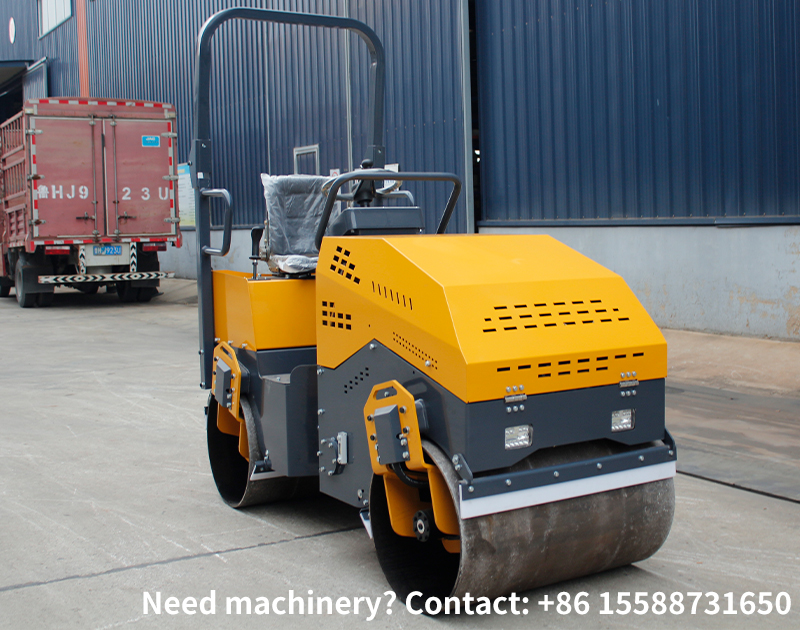
Double-drum Rollers
Core Features: Both front and rear wheels are steel drums, which can vibrate or oscillate synchronously, ensuring high rolling flatness. They can also adjust water sprinkling volume to prevent asphalt from sticking to the wheels.Core Applications: Compaction of asphalt concrete pavements, including the entire process of initial compaction, intermediate compaction, and final compaction. They are special equipment for the construction of asphalt surface courses of municipal roads and highways.
Pneumatic-tired Rollers
Core Features: Adopt multiple sets of inflatable rubber tires. The compaction process has a kneading effect, which can make pavement material particles interlock with each other without damaging the pavement structure.Core Applications: Final compaction of asphalt pavements to improve pavement density and flatness. They can also be used for the final compaction of bases such as cement-stabilized soil and lime soil, avoiding wheel marks left by steel drum rolling.