

 Chinese
- HOME >> NEWS >> Company news
NEWS
Latest Product
Contact Us
Positioning and Operation Methods of Crawler Excavators in Narrow Foundation Pits
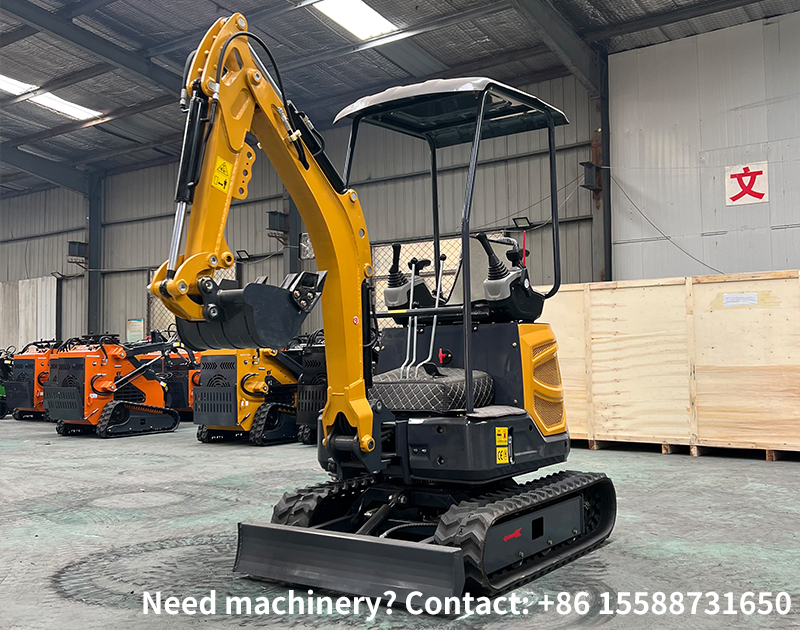
2026-01-29When a crawler excavator operates in narrow foundation pits (including slim, deep and irregular foundation pits), the core positioning principles are "route pre-judgment, small-scale adjustment, steady movement and slow turning, and edge-hugging operation". The key problems to be solved include difficult positioning, insufficient turning radius, and easy scratching of pit walls/pipelines caused by space constraints. Practical operation methods are formulated from four dimensions: pre-operation planning, basic positioning methods, adaptation to different foundation pit scenarios, and safe operation taboos, which balance positioning flexibility and operational safety while ensuring excavation efficiency. The specific operation points are as follows:
I. Pre-operation Preparation: Plan Positioning Routes and Pre-emptively Avoid Space Risks
The core of operating in narrow foundation pits is "plan first, operate later". Clarify the positioning area and turning space in advance to fundamentally reduce invalid positioning and avoid scratching or sinking due to misjudgment of space:
Foundation pit survey and space measurement: Confirm the length, width, depth and slope of the foundation pit wall, mark obstacles such as bearing platforms, pile foundations, pipelines and steel reinforcement cages in the pit, and measure the matching degree between the minimum turning radius of the excavator (including the extended radius of the bucket) and the available space of the pit. If the pit width is smaller than the minimum turning radius of the excavator, plan fixed-point excavation plus segmented positioning in advance.
Plan core positioning routes: Design a one-way positioning route according to the excavation sequence (from one end to the other, from the pit edge to the core), minimize backtracking and in-situ turning, and determine excavation stations and moving transition points. The distance between adjacent stations is controlled within 1-2 pitch lengths of the excavator's crawler movement to ensure station adjustment can be completed with small-scale movement.
Equipment adaptation and adjustment: Switch the excavator to low-speed operation mode, retract all working devices (fully retract the bucket, lower the boom to form a 30°-45° angle with the ground, retract the dipper arm) to reduce the extended radius of the working devices; check the crawler tension (adjust to the standard tension state) to prevent crawler deviation during positioning, and clean excess muck on the outside of the bucket to avoid scratching the pit wall and obstacles.
Pit wall and ground protection: If the pit wall is plain soil and prone to collapse, conduct simple support for the pit wall in advance (such as paving steel plates and driving wooden stakes), mark soft ground areas in the pit, and pave gravel/steel plates at the positioning points if necessary to prevent sinking during positioning and ensure stable crawler ground contact.
II. Core Basic Positioning Methods: Small Steps and Slow Movement, Small-scale Turning, Edge-hugging Adjustment
Positioning in narrow foundation pits prohibits large-angle turning, long-distance movement and forced in-situ turning. All positioning movements shall be "small-scale, slow and controllable", and are mainly completed by the cooperation of "crawler inching + working device support + small-angle turning". There are 3 basic positioning methods, applicable to basic station adjustment in all narrow foundation pits:
Method 1: Linear small-scale positioning (forward and backward movement) – Suitable for adjusting excavation stations along the length of the foundation pit
Lower the working devices before operation to make the bucket touch the ground slightly (the bucket teeth insert 5-10cm into the ground), and use the working devices to support the machine body to prevent shaking and deviation when the crawlers move.
Perform "inching operation" on the travel control valve, allowing the crawlers to move only 1-2 track pitches (about 30-60cm) each time, and keep the left and right crawlers synchronized during movement; sudden acceleration and braking are prohibited.
After moving to the target station, stabilize the crawlers first, then fine-tune the position of the working devices to keep the machine body parallel to the excavation face. Start excavation only after confirming the machine body is level and without deviation.
Method 2: Small-angle edge-hugging turning (≤45°) – Suitable for small-scale direction adjustment in the pit to avoid scratching the pit wall
Retract the working devices to the side of the machine body (parallel to the crawlers) before turning to reduce the extended radius, and lean the excavator against the non-operational side wall of the pit (the side without excavation demand) to reserve turning space by using the space of the pit wall.
Turn by means of "one-side crawler inching braking": to turn left, perform inching braking on the left crawler and low-speed inching forward on the right crawler, with the turning angle controlled at 15°-45°. Stabilize immediately after each turn and check the distance from the pit wall to avoid scratching.
After turning, fine-tune the crawlers to straighten the machine body, ensure the left and right crawlers are perpendicular to the operation face, then lower the working devices to support the machine body and confirm the station is stable.
Method 3: Working device-assisted turning and positioning – Suitable for ultra-narrow foundation pits (width smaller than the minimum turning radius of the excavator)
When the pit space cannot meet the normal turning of the crawlers, use the bucket and dipper arm as supports to realize small-scale turning adjustment of the machine body: place the bucket on the ground at one side of the machine body (90° to the crawlers), extend the dipper arm to make the bucket support the ground firmly.
Operate one-side crawler to inch forward/backward, and drive the machine body to make small-scale turning (≤30° each time) by using the supporting reaction force of the bucket. After completing the direction adjustment, retract the working devices and then fine-tune the crawler station.
This method is only applicable for emergency small-scale adjustment. Prohibit long-term turning with the support of working devices to prevent overload damage to the dipper arm and boom hydraulic cylinders.
III. Scenario-adapted Positioning Methods for Different Narrow Foundation Pits: Targeted Adjustment for Irregular/Restricted Spaces
Adjust the coordination of positioning and excavation in a targeted manner according to the different width, shape and depth of foundation pits to solve the space constraint pain points in different scenarios. There are 4 types of common core scenarios with strong practicality:
Scenario 1: Slim straight foundation pits (width 2-3 times the machine body width, with linear positioning space)
Adopt the mode of "one-way linear positioning + fixed-point excavation", and advance gradually from one end of the pit to the other. Only perform linear small-scale movement for each positioning without large-angle turning;When excavating, lean the machine body against one side wall of the pit and excavate toward the operation face on the other side with the working devices, using the space of the single pit wall to avoid scratching the working devices. After completing excavation at one end, make a small-angle turn at the pit end by using the remaining space, then turn back along the original route to excavate the other side.
Scenario 2: Ultra-narrow foundation pits (width <2 times the machine body width, without normal turning space)
Adopt the mode of "fixed-point excavation + segmented positioning". The excavator completes excavation in the area (all muck within the excavation radius) at a fixed station, then realizes small-scale positioning through working device-assisted turning + crawler inching to enter the next fixed-point excavation area;When excavating, adjust the working devices to the minimum turning radius and only perform small-scale movements such as bucket retraction/extension and dipper arm expansion/contraction to avoid large-scale boom turning. Directly throw the muck to the designated area outside the pit to reduce muck accumulation in the pit and reserve space for positioning.
Scenario 3: Deep foundation pits (depth >5m, narrow pit mouth with small internal space)
Adopt the mode of "layered excavation + edge-hugging positioning", and excavate layer by layer according to the pit depth (excavation depth per layer ≤2m). Each layer is positioned along the pit wall to avoid the machine body stopping at the core area of the pit (without turning space);When positioning, use the step surface of the pit wall (steps after layered excavation) as a support to keep the machine body level with the step surface. Forbid in-situ turning at the bottom of deep foundation pits. Transfer the muck to the ground through the chute at the pit mouth to prevent muck accumulation from blocking the positioning line of sight.
Scenario 4: Irregular foundation pits (cornered, curved, multi-pile foundation pits with many obstacles)
Adopt the mode of "corner edge-hugging positioning + precise pile-around positioning". At the pit corner, first excavate the muck outside the corner to reserve turning space for positioning, then lean against the inner wall of the corner to make a small-angle turn of ≤45° to avoid scratching the working devices at the corner;When encountering obstacles such as pile foundations and steel reinforcement cages, adopt "crawler inching fine-tuning + working device avoidance", with each positioning movement ≤30cm. When excavating, let the working devices pass through the gaps between obstacles. Forbid forced positioning and excavation, and manually assist in cleaning muck around obstacles if necessary.
IV. Coordination Skills of Positioning and Excavation: Dig and Clear Simultaneously, Facilitate Movement by Excavation
Positioning and excavation in narrow foundation pits cannot be completely separated. Create conditions for subsequent positioning by "digging and cleaning the positioning space simultaneously", and reduce invalid movement to improve overall operational efficiency:
Prioritize cleaning the positioning area during excavation: Before each excavation, first clean the muck around the station and on the next positioning route to ensure no raised muck when the crawlers move, avoiding machine body tilting and crawler slipping.
Stack muck nearby without occupying positioning space: Prioritize throwing the excavated muck outside the pit. If temporary stacking in the pit is required, stack it in non-positioning areas far from the operation face with the stacking height not exceeding the crawler height to prevent muck collapse from burying the crawlers.
"Dig a little, move a little": Immediately perform small-scale positioning after cleaning the muck within the excavation radius, without waiting for the complete excavation of the area, to avoid no space for subsequent positioning due to excessive muck accumulation.
Use muck to pave the positioning surface: If the pit bottom is soft ground or silt, pave the excavated hard soil and gravel on the positioning route to form a temporary hard ground surface, preventing sinking during positioning and ensuring the stability of the machine body.
V. Safe Operation Taboos: Strictly Prohibit Irregular Movements and Avoid Space Accidents
Space is limited in narrow foundation pits, and any irregular positioning movement may cause scratching of the pit wall, collapse, equipment damage and casualties. The following core taboos must be strictly observed as the bottom line of operational safety:
Strictly prohibit large-angle in-situ turning (>90°) and forced turning; do not use the pit wall for reaction force turning to prevent the pit wall from collapsing due to scratching or damage to the working devices.
Strictly prohibit long-distance crawler movement, sudden acceleration/braking; all walking movements shall be inching operations to prevent crawler slipping and deviation and collision with obstacles.
Strictly prohibit excavation when the machine body is not stabilized and not supported by working devices to prevent rollover caused by machine body shaking, especially at the bottom of deep foundation pits where the rollover risk is greatly increased.
Strictly prohibit rotating the working devices with them extending above the pit wall to prevent the working devices from scratching the pit wall and causing soil collapse to bury the equipment.
Strictly prohibit random adjustment of crawler direction in the pit. After each positioning and turning, check the distance between the machine body and the pit wall/obstacles to ensure the minimum distance is ≥50cm. If the distance is insufficient, stop operation immediately and re-plan the positioning route.
Forbid positioning when the line of sight is blocked (such as muck blocking and poor line of sight at the bottom of deep foundation pits). Assign a dedicated person to direct and coordinate positioning with gesture commands; operation by feeling alone is prohibited.
VI. Supplementary: Emergency Positioning Handling – Rapid Adjustment for Precursors of Sinking/Scratching
If there are precursors of slight crawler sinking or machine body deviation and scratching in the pit, stop positioning immediately and take emergency measures as follows to avoid accident escalation:
Slight sinking: Immediately lower the working devices to the hard soil area, support the ground firmly with the bucket, jack up the machine body by using the excavation force, and at the same time operate the crawlers to inch backward to exit the sinking area. Pave gravel/steel plates at the sinking point before resuming positioning.
Precursors of scratching: Immediately retract the working devices, operate one-side crawler to inch backward to pull the machine body away from the pit wall/obstacles, then adjust the machine body position by small-angle turning, and resume operation only after confirming there is no scratching risk.
Machine body tilting: Immediately stabilize all movements, lower the working devices to support the machine body and restore it to a level state, check the cause of tilting (raised muck, soft ground sinking), and perform small-scale positioning after cleaning; prohibit continuous movement or excavation when the machine body is tilted.