
 Chinese
- HOME >> NEWS >> Company news
NEWS
Latest Product
Contact Us
How to Avoid Shoving and Cracking During Asphalt Pavement Rolling
2026-02-22I have summarized the most practical on-site key points to directly prevent shoving and cracking, which can be used for both exams and construction – all practical essentials.
I. Key Points to Prevent Shoving (Bulging, Waviness)
Temperature Control (Most Critical)
Initial rolling must be carried out at high temperature.
General rule: Start initial rolling at not less than 130℃.
Low temperature → mixture becomes hard → shoving will definitely occur.
Static Pressure for Initial Rolling, No Vibration
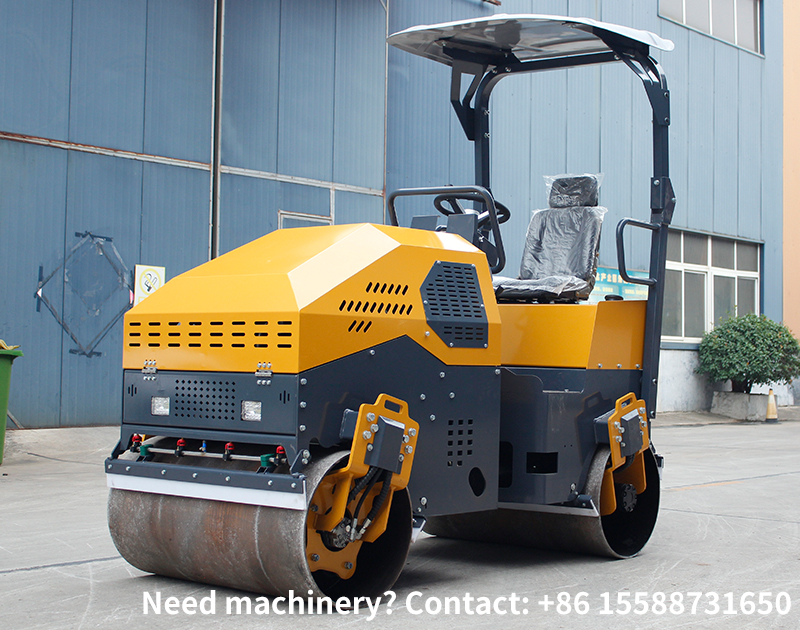
Use static pressure with a tandem-drum roller to stabilize the mixture first.
Starting vibration immediately after paving → definite shoving and bulging.
Rolling Direction and Speed
Roll from the lower side to the higher side, from the road edge to the center.
Keep speed slow, stable, and uniform.
No sudden starting or sudden braking.
Coordination Between Paver and Roller
Follow closely behind the paver, roll in short distances and continuously.
Do not wait until the mixture cools down before rolling.
II. Key Points to Prevent Cracking
Strictly Forbid Rolling at Low Temperature
Forcible rolling at excessively low temperature → direct transverse and map cracking.
Final rolling finishing temperature: generally not less than 70℃–90℃ (depending on the mixture).
Correct Timing for Vibration
High temperature: vibration can be used.
Low temperature: vibration must be turned off.
Reasonable Number of Rolling Passes
More passes are not always better.
Over-rolling → asphalt bleeding, aggregate crushing → cracking.
Joint Treatment
Lightly roll transverse and longitudinal joints first, then roll normally.
Avoid sudden stops and sharp turns at joints.
III. One-Sentence Summary (Easy to Remember)
Follow closely with static pressure at high temperature for stabilization;Vibrate and knead during secondary rolling without over-compaction;Turn off vibration at low temperature to prevent cracking.