

 Chinese
- HOME >> NEWS >> Industry news
NEWS
Latest Product
Contact Us
In Which Engineering Fields Are Excavators Most Widely Used?
2025-05-22As an extremely versatile piece of construction machinery, excavators are used in nearly all fields involving earthwork and rock handling. Below are the most common engineering applications and their specific uses:
1. Construction Engineering
Foundation Excavation: Digging deep foundations for high-rise buildings, basements, etc.
Ground Preparation: Land leveling, trenching (e.g., pipeline installation).
Demolition Work: Equipped with hydraulic breakers to dismantle old structures and concrete.
2. Road & Bridge Construction
Subgrade Construction: Filling or excavating roadbed materials.
Slope Grading: Shaping and reinforcing embankments along highways/railways.
Bridge Foundations: Pile hole excavation, cofferdam construction, and abutment earthwork.
3. Mining & Quarrying
Ore Extraction: Overburden removal and loading in open-pit mines (often using large mining excavators).
Rock Crushing: Secondary ore fragmentation with hydraulic breakers.
4. Hydraulic & Power Engineering
Dredging: Removing silt and widening river channels.
Dam Construction: Earth-rock dam filling and diversion channel excavation.
Power Plant Projects: Foundation pits and pipeline trenching for nuclear/hydroelectric stations.
5. Municipal Engineering
Pipeline Installation: Digging and backfilling trenches for water, gas, and cable lines.
Landscaping: Shaping terrain for parks and digging tree pits.
Emergency Rescue: Post-flood silt clearance or landslide clearance on roads.
6. Agriculture & Forestry
Farmland Improvement: Building terraces and irrigation ditches.
Log Handling: Using grapples to load timber or clear forested areas.
7. Ports & Waterways
Wharf Construction: Leveling container yards and excavating shore slopes.
Dredging Operations: Underwater silt removal (requires long-reach or amphibious excavators).
8. Specialized Applications
Military Engineering: Rapid fortification or obstacle clearance.
Polar/High-Altitude Work: Specialized excavators for low-temperature, low-oxygen environments.
Key Advantages
Versatility: Adaptable to different tasks by switching attachments (buckets, breakers, etc.).
Terrain Adaptability: Tracked excavators operate efficiently in muddy or rugged conditions.
Efficiency & Cost-Effectiveness: Significantly reduces project timelines and labor costs compared to manual work.
Typical Application Comparison
| Field | Common Models | Core Function |
|---|---|---|
| Construction | Medium hydraulic excavator (20-30t) | Foundation digging, material handling |
| Mining | Large mining excavator (100t+) | Ore loading, overburden removal |
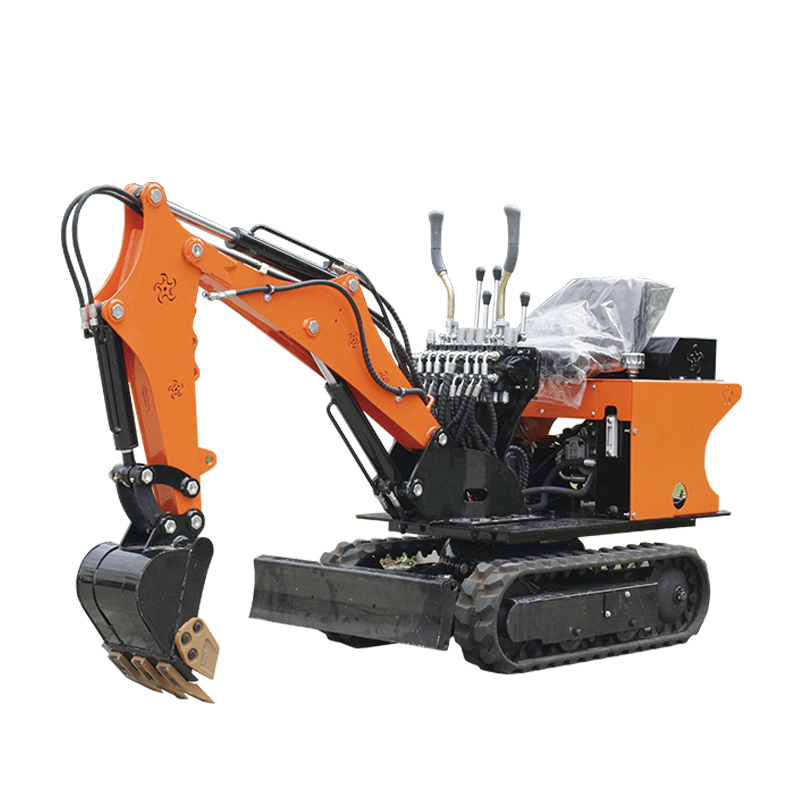
| Municipal Projects | Mini excavators (1-6t) | Trenching in confined spaces |
| Hydraulic Engineering | Long-reach excavators (10m+ boom) | Deep dredging, dam reinforcement |
Future Trends
Automation: Autonomous excavators for hazardous environments (e.g., landslide zones).
Electrification: Zero-emission operation in urban areas (e.g., municipal projects).
Multi-Function Integration: Quick attachment switching to reduce equipment costs.
Excavators' wide-ranging applications make them indispensable "all-rounders" in modern engineering.