

 Chinese
- HOME >> NEWS >> Company news
NEWS
Latest Product
Contact Us
How to Safilely Operate Excavators in Confined Spaces (e.g., Municipal Engineering, Indoor Demolition)
2025-05-15Working in confined spaces is one of the most challenging conditions for excavator operation, requiring special equipment modifications, operational skills, and safety management. Below is a comprehensive solution for scenarios such as municipal pipelines, old neighborhood renovations, and indoor demolition.
I. Equipment Selection and Modifications
Machine Selection
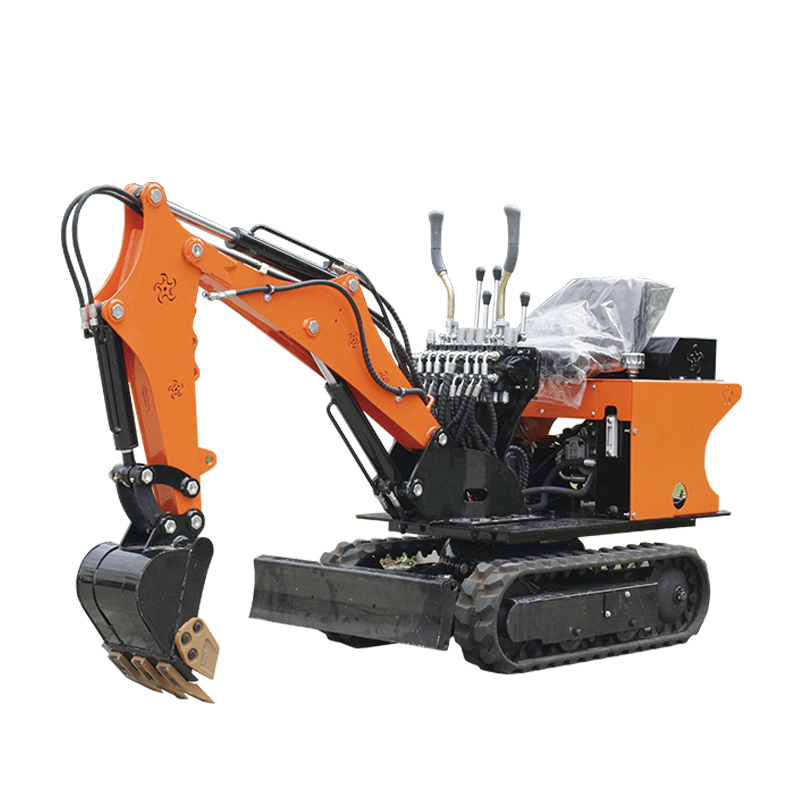
Prioritize 1.8-6 ton mini excavators
Choose zero-tail swing design (reduces rear overhang by 40% or more)
Wheeled excavators are recommended for municipal projects (quick relocation)
Essential Modifications
Install full protective cages (to prevent falling object impacts)
Replace with rubber tracks/tires (to protect paved surfaces)
Equip LED panoramic cameras (blind-spot monitoring system)
Install audible and visual alarms (automatic alerts during rotation)
Attachment Optimization
Municipal pipelines: Use a 450mm narrow trench bucket
Indoor demolition: Equip with hydraulic shears + thumb clamp (precision dismantling)
Add a 1.5m short arm (improves control accuracy)
II. On-Site Layout Plan
Work Zone Planning
Establish three-tier isolation zones:
Core work area (3m radius) → Buffer transition zone (5m) → Safety Warning area (10m)
Use foldable debris nets (to prevent flying Gravel)
Access Routes
Minimum passage width = machine width + 1m (e.g., 1.8-ton machine requires 2.2m clearance)
Conduct ground load-bearing tests (indoor areas must withstand ≥8t/m²)
Special Environment Handling
Measure clear height (equipment height + 0.5m margin)
Remove obstacles such as ventilation ducts
Underground garage operations:
III. Precision Operation Techniques
Positioning Control
Adopt the "three-point positioning method":
Tracks parallel to the work surface
Machine body ≥0.8m from obstacles
Work equipment always within the operator’s line of sight
Movement Standards
Pilot control lever operation limited to 1/3 of full travel
Rotation speed restricted to ≤50%
Decompose combined movements (no simultaneous rotation + lifting)
Implement "millimeter-level micro-operations"
Typical Scenario Operations
Pipeline excavation: Manually inspect pipes every 0.5m depth
Wall scraping: Maintain a 15° angle between bucket and wall (prevents scraping)
Parallel-to-wall digging: Use the arm’s side-shift function (avoids machine movement)
IV. Safety Monitoring System
Personnel Allocation
Two-person team required:
Operator (with special operation certification)
Safety supervisor (directing with flags, positioned outside blind spots)
Smart Protection
Install ultrasonic anti-collision systems (auto deceleration at 1.5m detection range)
Use UWB positioning tags (auto shutdown if personnel approach within 0.5m)
Emergency Measures
Equip emergency lowering devices (manual work equipment lowering in case of power failure)
Check hydraulic line seals every 2 hours (prevents hose bursts)
V. Special Requirements for Municipal Engineering
Road Occupation Work
Nighttime illumination ≥100 lux
Noise control measures (machine noise ≤72 dB)
Heritage Protection Zones
Use non-vibratory excavation techniques (e.g., vacuum suction)
Reduce working pressure by 30% (minimizes accidental impacts)
VI. Prohibited Actions
Never operate on slopes >5°
Do not use bucket impacts for wall demolition
Avoid single-track hang in the air operations
Conclusion: Confined space operations require an integrated approach of "equipment modification—precision operation—smart protection." BIM simulation rehearsals are recommended before construction. With these techniques, a Shanghai renovation project achieved 300 accident-free hours in a 3.2m-wide alley.