

 Chinese
- HOME >> NEWS >> Industry news
NEWS
Latest Product
Contact Us
Small Rollers vs. Large Rollers: Their Respective Applications
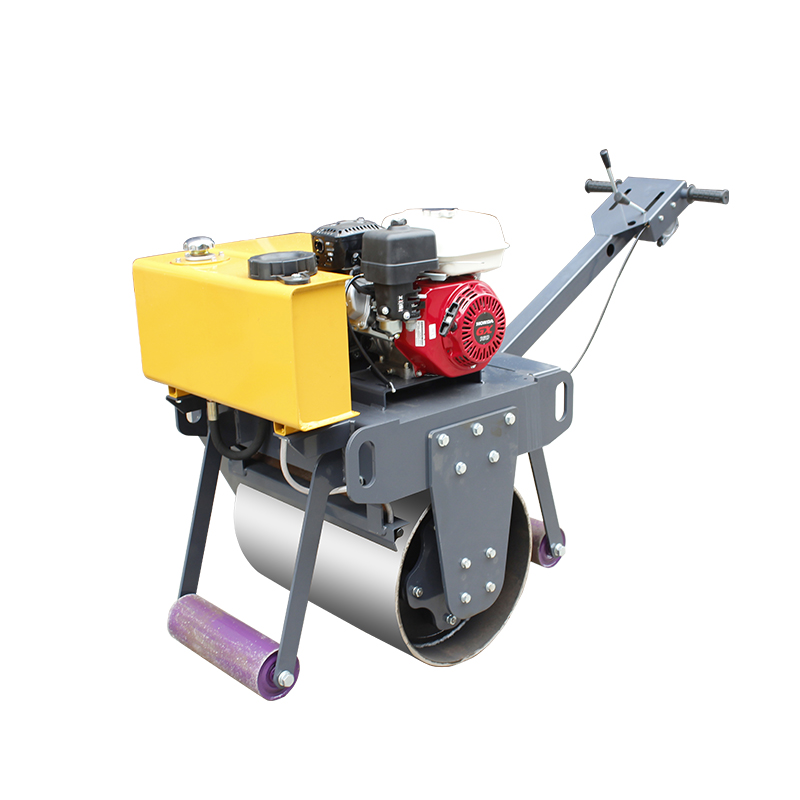
2025-06-26Rollers can be categorized by weight and size into small (1-8 tons) and large (8+ tons). They differ significantly in construction efficiency, maneuverability, and applicable scenarios.
I. Small Rollers (1-8 tons)
Characteristics:
Lightweight, flexible, and easy to operate, suitable for confined or restricted spaces.
Mostly walk-behind or mini ride-on models, powered by diesel or electric engines.
Limited compaction depth, ideal for small-scale, precision work.
Applications:
Municipal Engineering
Compaction of sidewalks, bicycle lanes, and areas around curbs.
Backfill compaction around pipelines and manholes to avoid damage from large equipment.
Construction Sites
Foundation and basement backfill compaction for buildings.
Landscaping projects (e.g., flower beds, lawn base compaction).
Confined Spaces
Underground parking lots, bridge culverts, and indoor floor compaction.
Rural road repairs in mountainous or rugged terrain.
Asphalt Patching
Final compaction after local pothole or crack repairs, preventing over-compaction by large rollers.
Advantages:
✔ High maneuverability, can access tight spaces
✔ Low fuel consumption and maintenance costs
✔ Suitable for precision compaction
Disadvantages:
✖ Limited compaction depth, not suitable for thick fill layers
✖ Low efficiency, not ideal for large-scale projects
II. Large Rollers (8+ tons)
Characteristics:
Heavyweight (10-26 tons), strong compaction capability, suitable for deep compaction.
Mostly ride-on models with vibration/oscillation functions for high efficiency.
Wide working width, ideal for continuous, large-area compaction.
Applications:
Highway/Railway Subgrades
Layered compaction of thick earthwork (30cm+) to ensure load-bearing capacity.
Airport Runways/Port Foundations
Impact or vibratory compaction for high-fill areas (e.g., land reclamation projects).
Large-Scale Asphalt Pavement Construction
Initial and intermediate compaction of asphalt surfaces on urban roads and highways.
Hydraulic/Energy Projects
Embankment and reservoir earthwork compaction requiring high density for seepage prevention.
Mining/Industrial Sites
Base compaction for mine roads and storage yards to withstand heavy vehicle loads.
Advantages:
✔ Large compaction depth (50cm+)
✔ High efficiency, suitable for continuous large-area work
✔ Vibration/oscillation enhances compaction effect
Disadvantages:
✖ Poor maneuverability, cannot access narrow spaces
✖ High fuel consumption and maintenance costs
III. Key Comparison Summary
| Comparison Factor | Small Rollers (1-8 tons) | Large Rollers (8+ tons) |
|---|---|---|
| Application | Confined spaces, precision work | Large-scale, deep compaction |
| Typical Uses | Municipal repairs, foundations, landscaping | Highways, airports, dams |
| Compaction Depth | Shallow (10-20 cm) | Deep (30-50 cm+) |
| Maneuverability | High (walk-behind/mini ride-on) | Low (requires wide working space) |
| Efficiency | Low (small areas) | High (continuous operation) |
| Cost | Low (purchase/fuel/maintenance) | High (expensive equipment, high operating costs) |
IV. How to Choose?
Choose small rollers: For confined spaces, small repairs, and precision compaction (e.g., municipal, construction).
Choose large rollers: For thick fill layers, high-grade roads, airports, and other high-load-bearing scenarios.
Combined use: Large rollers handle main compaction, while small rollers finish edges and details (e.g., final asphalt compaction).
Matching the right machine to the project ensures both efficiency and quality!