

 Chinese
- HOME >> NEWS >> Industry news
NEWS
Latest Product
Contact Us
What are the advantages of electric forklifts for indoor operations?
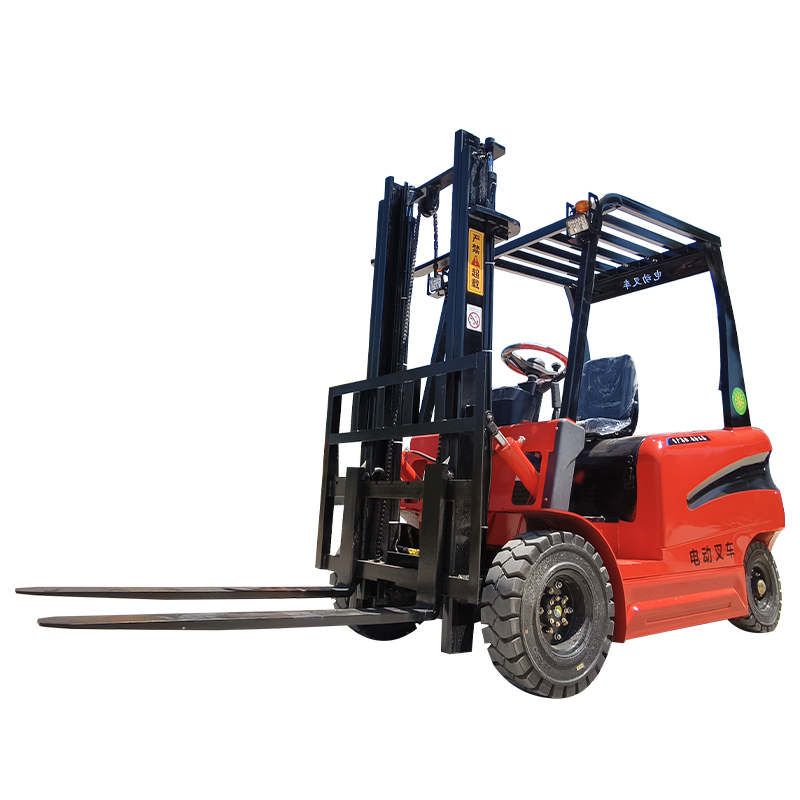
2025-09-18With features such as no exhaust emissions, low noise, and flexible operation, electric forklifts demonstrate significant advantages in indoor scenarios like warehousing, logistics, and manufacturing. They are particularly suitable for the operational needs of indoor enclosed or semi-enclosed environments, which can be elaborated on from four key dimensions: environmental friendliness, operational safety, ease of operation and maintenance, and economy.
1. Environmental Friendliness: The Core Advantage for Indoor Enclosed Scenarios
Indoor operations have extremely high requirements for "air quality" and "noise control". Electric forklifts have almost no shortcomings in such scenarios, which is a core advantage that fuel-powered forklifts (diesel or gasoline) cannot match.
Zero Exhaust Emissions to Ensure Indoor Air Quality
Electric forklifts rely on batteries to power their motors and produce no exhaust emissions (such as carbon monoxide, nitrogen oxides, and particulate matter) during operation, fully complying with air standards for indoor enclosed environments.
Low-Noise Operation to Reduce Indoor Noise Pollution
The noise of electric forklifts mainly comes from the motor and air duct. During operation, the noise is usually between 60-75 decibels (similar to the volume of normal conversation), which is much lower than that of fuel-powered forklifts (diesel forklifts produce about 90-110 decibels, equivalent to the sound of an electric saw starting).
2. Operational Safety: Reducing Risks in Complex Indoor Environments
Indoor operation spaces are usually narrow (e.g., aisle width is only 2-3 meters), and there is frequent overlap between personnel and goods. The design features of electric forklifts can significantly reduce safety risks such as collisions and fires.
Flexible Operation for Narrow Spaces
Electric forklifts, especially counterbalanced and reach-type ones, generally have a small turning radius (some models have a minimum turning radius of only 1.5-2 meters) and precise maneuverability (the motor has a fast response speed, allowing fine adjustment of the driving speed and fork position). They can move flexibly in narrow indoor aisles and gaps between shelves, reducing the risk of colliding with shelves or goods.
No Fuel Leakage Risk to Reduce Fire Hazards
Electric forklifts do not require refueling with flammable fuels such as diesel or gasoline, and there is no problem of fuel pipeline leakage due to aging. This fundamentally avoids the fire and explosion risks caused by indoor fuel leakage.
Low Vibration to Improve Operational Stability
The motor of an electric forklift operates stably, without the mechanical vibration of a fuel engine. During operation, the vibration amplitude of the vehicle body is small (the vibration frequency is usually ≤ 2Hz), which can reduce the risk of goods falling due to vibration (e.g., when transporting fragile items or precision instruments). At the same time, it reduces the fatigue of operators who drive for a long time.
3. Ease of Operation and Maintenance: Adapting to High-Frequency Indoor Operation Needs
Indoor operations usually feature "high frequency and multiple shifts". Electric forklifts have a low operation threshold and simple maintenance, which can reduce downtime and improve operational efficiency.
Low Operation Threshold and Easy to Master
Electric forklifts are driven by motors, and their control systems (such as accelerator pedals, steering, and fork lifting) are smoother. There are no complex operations like "clutch shifting" and "accelerator force control" required for fuel-powered forklifts. New employees can usually work independently after 1-2 days of training, reducing the enterprise's personnel training costs.
Long Maintenance Cycle and Low Downtime Cost
The core components (motor and battery) of electric forklifts have a simple structure, and there are no easily wearable parts like the engine, gearbox, and exhaust system of fuel-powered forklifts. The maintenance frequency and cost are much lower than those of fuel-powered forklifts.
Adaptable to Special Indoor Operation Needs
Electric forklifts can be modified to meet diverse indoor needs. For example:
4. Economy: Lower Long-Term Usage Costs
Although the initial purchase cost of electric forklifts is slightly higher than that of fuel-powered forklifts (about 10%-20% higher), in long-term use, they have significant cost advantages in terms of electricity fees and maintenance costs. Usually, the initial price difference can be offset within 2-3 years.
Low Energy Consumption Cost: Electricity Fees Are Far Lower Than Fuel Fees
The energy consumption cost (electricity fee) of electric forklifts is only 1/3-1/5 of that of fuel-powered forklifts (diesel or gasoline fees).
Low Maintenance Cost: Reducing Expenses on Parts Replacement
Electric forklifts have no easily wearable parts such as engines, engine oil, and filters. Their annual maintenance cost is usually only 1/4-1/3 of that of fuel-powered forklifts.
Conclusion: Core Adaptable Scenarios of Electric Forklifts for Indoor Operations
Based on the above advantages, electric forklifts are particularly suitable for the following indoor scenarios:
Compared with fuel-powered forklifts, electric forklifts can not only meet the core needs of indoor environments but also bring long-term economic benefits to enterprises by reducing energy consumption and maintenance costs.
Would you like me to help you make a comparison table of key indicators between electric forklifts and fuel-powered forklifts based on the translated content? It can more intuitively show the differences in aspects like emissions, noise, and costs.